

Guide
Private-label sampling rounds: what each one is for
A private-label project usually moves through fragrance and formula samples, packaging mock-ups, a pre-production sample and a first-production check, and each round answers a different question. Knowing what each round is for stops you judging the wrong thing at the wrong time.
By Hemang Jain, Founder, Anadoris
Why are there several sampling rounds?
An own-brand product combines decisions that are made by different people and suppliers: the formula, the fragrance, the bottle, the closure, the decoration and the carton. They cannot all be finalised at once. Sampling in stages lets each decision be settled before the next one depends on it.
The number of rounds is not fixed. A range built from stock formulas and stock packaging may need few; a bespoke range needs more. What matters is that each round has a clear purpose and a clear approver.
It also helps to agree, at the start, how many units of each sample you need. Testing a body wash with one person tells you little. Enough units for a small group of testers gives more reliable feedback, and enough units for retained references avoids requesting extras later.
What are the typical rounds?
This table summarises typical private-label sampling rounds. Some projects combine rounds; bespoke projects may repeat them.
| Round | What you receive | Question it answers |
|---|---|---|
| Fragrance samples | Scents on blotters or in a simple base | Which fragrance direction fits the brand? |
| Formula samples | Products in plain containers | Do texture, lather and feel work? |
| Packaging mock-ups | Unfilled or plain bottles, caps and decoration trials | Do the components look and work right together? |
| Pre-production sample | Filled, decorated product made as production will be | Is this exactly what will be made? |
| First-production check | Units from the first production run | Does production match the approved sample? |
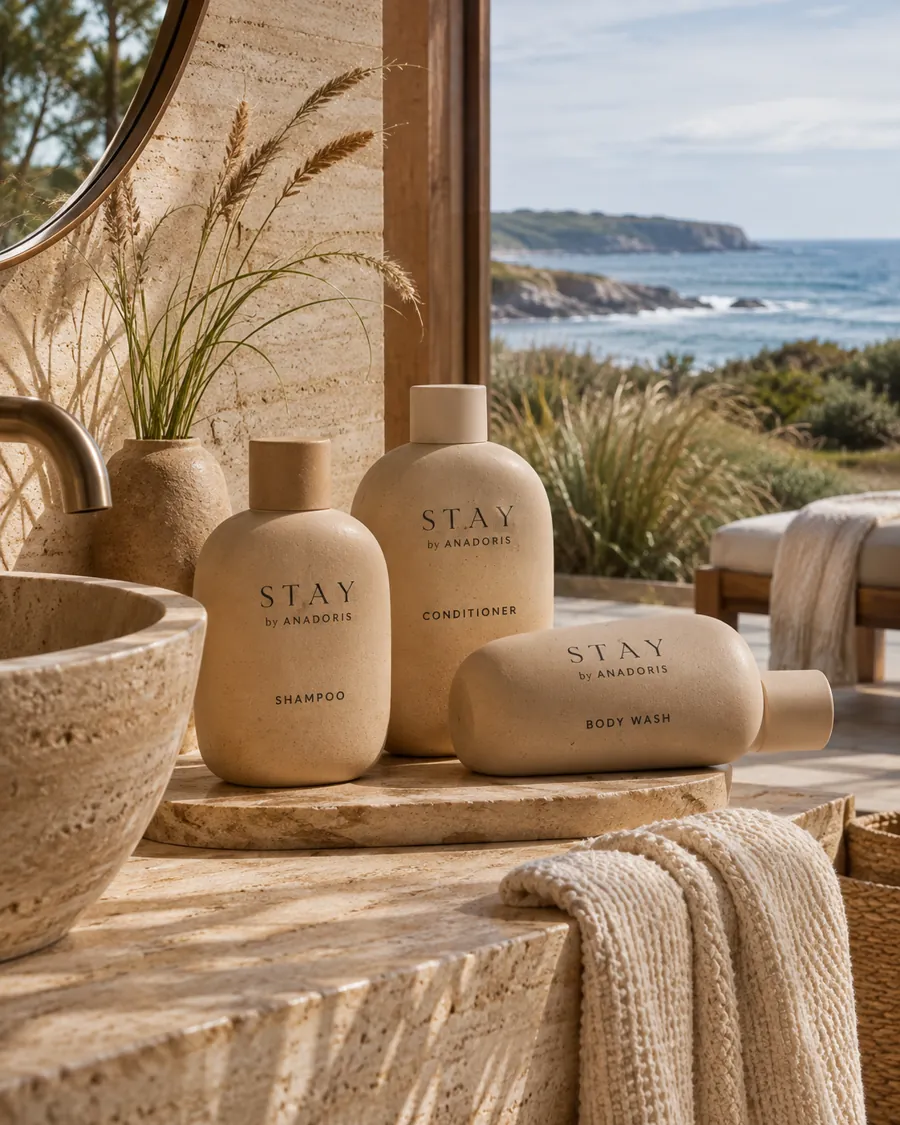
What should you judge at the formula stage?
Judge function and feel, not looks. Use the product as a guest or customer would: in a real shower, with hot water, over several uses. Note the lather, rinse, the feel of hair or skin afterwards, the fragrance on skin and how the product behaves in the bottle.
Do not reject a formula sample because it is in a plain jar or unlabelled bottle. That is expected at this stage. Equally, do not approve a formula because you like a mock-up bottle shown alongside it.
Compare formula samples side by side with a product you already know, such as your current amenity or a product the team uses at home. A benchmark makes it easier to describe what you want changed: "richer lather than this", "lighter feel than that". Write notes immediately after use, since impressions fade quickly.
What should you judge at the packaging stage?
- Does the bottle stand and grip well when wet?
- Does the closure open easily and seal properly?
- Is the decoration durable and legible?
- Do colours match the brand references?
- Do all products in the range look like one family?
Packaging mock-ups may use plain or hand-applied labels. Check proportions and finish here; check final artwork on the pre-production sample.
Test practical details too. Fill a mock-up with water or the sample formula and check that the closure seals, that the bottle does not deform when squeezed and that it sits correctly in any dispenser bracket you plan to use. These checks take minutes and save a round of rework.
Why is the pre-production sample the key approval?
The pre-production sample is made with the approved formula, fragrance, components and artwork, as close as possible to how the production run will be made. It is the reference that production will be compared against.
Approve it only when everything is right, and keep several approved units, sealed and labelled, as retained references. One goes to the manufacturer's quality team, one stays with you. These references settle any later question about whether a batch matches what was agreed.
Check the pre-production sample against everything earlier: the approved fragrance, the approved formula feel, the approved components and the approved artwork version. Confirm the batch code and any date marking are printed where expected. If anything differs from an earlier approval, ask whether it is intentional before signing.
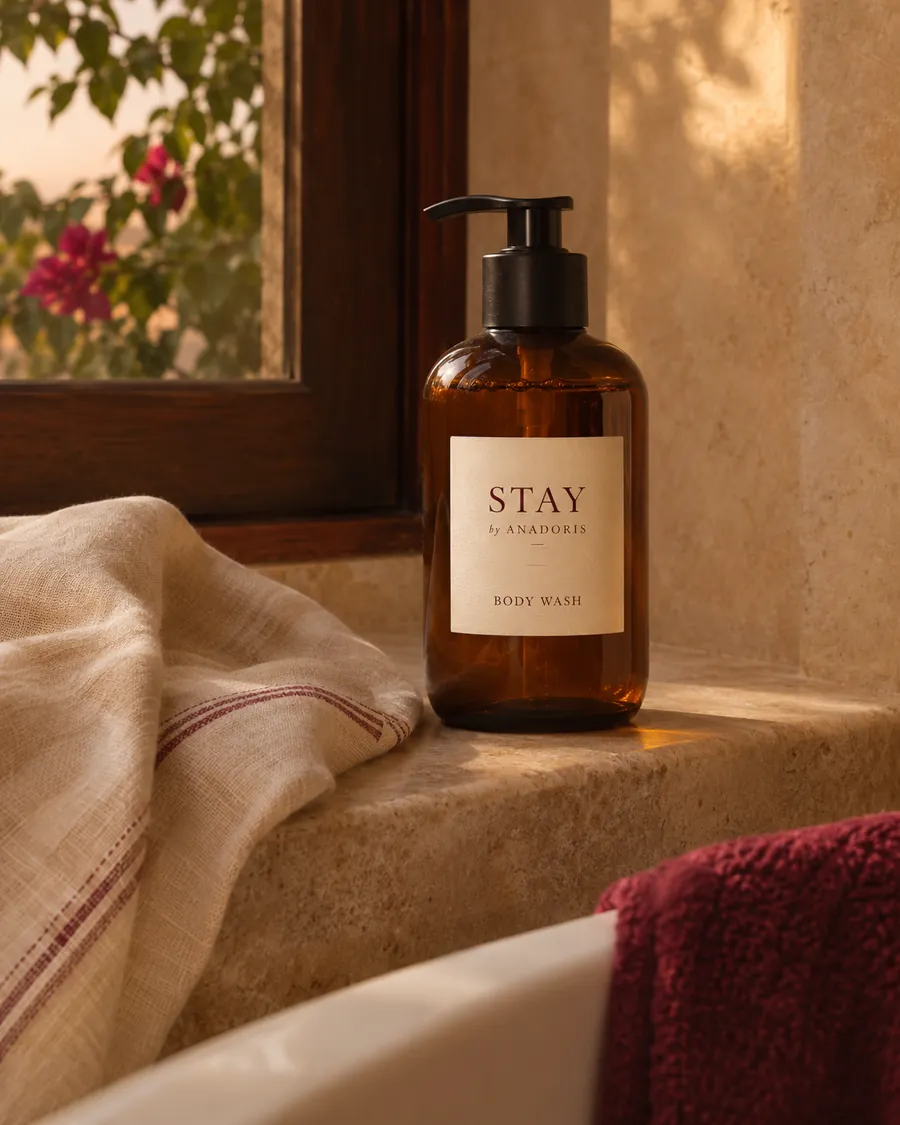
How do you keep rounds from multiplying?
- Write the brief before the first sample, and judge every sample against it.
- Approve each round before moving to the next.
- Change one variable at a time where you can.
- Give consolidated, specific feedback.
- Do not reopen decisions from earlier rounds unless there is a real problem.
Reopening fragrance after packaging is approved is the single most common reason a private-label project restarts.
What should you ask for alongside samples?
Ask for the product specification, the ingredient list, any stability or compatibility information the manufacturer holds, and the expected timeline for the next stage. Ask how many units are available for internal testing. For an organised tasting, see how to run an amenity sampling session. You can request STAY samples through the samples form.
Questions on this topic
What is a pre-production sample?
It is a filled, decorated product made with the approved formula, components and artwork, as close as possible to how production will run, and it becomes the reference for production.
Should I keep approved samples?
Yes. Keep sealed, labelled approved units so you and the manufacturer can compare future batches against them.
Can sampling rounds be combined?
Sometimes. Ranges built from stock formulas and stock packaging can combine stages, but bespoke projects usually need each round.
Keep reading
- Private label, white label or bespoke: what is the difference?
- How do you brief a private-label manufacturer?
- How to choose a fragrance for an own-brand amenity range
- Choosing bottle shape and material for a private-label range
- How to stock an Airbnb bathroom
- Hospital and clinic bathroom amenities: what to consider
- Gym locker room amenities: a practical checklist
Looking for supply? See Hotels & resorts, browse the product range or request samples.