

Guide
Choosing bottle shape and material for a private-label range
Choose a private-label bottle by starting with how it will be used, by whom and where, then picking a material and shape that suit that use, your brand and your volumes. Stock bottles decorated for you are the practical choice for most ranges; custom shapes make sense only when volume and time allow.
By Hemang Jain, Founder, Anadoris
Stock bottle or custom bottle?
A stock bottle is a standard shape the manufacturer or its packaging suppliers already make. You change the colour, the finish and the decoration. A custom bottle is a shape made for you, usually requiring a new mould.
Stock bottles keep minimums lower, reduce risk and shorten the path to launch. Custom bottles give a unique silhouette but add tooling cost, more approval steps and often higher minimums. Most own-brand ranges look distinctive through colour, finish and decoration rather than an unusual shape.
A middle option is a stock bottle with a distinctive cap, collar or finish. This gives a recognisable look without a new mould, and the bottle can be reused if the range later changes. Ask the manufacturer which stock shapes are long-running items, because those are the safest to build a brand around.
Which materials are common?
This table compares common bottle materials for amenity and personal-care ranges. Availability depends on size and the manufacturer's suppliers.
| Material | Look and feel | Practical points | Often used for |
|---|---|---|---|
| PET | Clear or tinted, glass-like | Light, rigid; can be made with recycled content | Miniatures, retail bottles |
| HDPE | Opaque, matte or soft sheen | Squeezable, robust, widely recycled in many areas | Shampoo, body wash, refill packs |
| PP | Opaque or translucent | Often used for caps and some bottles | Caps, small bottles, jars |
| Aluminium | Metallic, premium | Light and durable; needs a suitable inner lining for some formulas | Premium bathroom and retail ranges |
| Glass | Heavy, premium | Breakage risk in wet bathrooms and in transit | Retail, diffusers, some spa use |
How should shape and size be chosen?
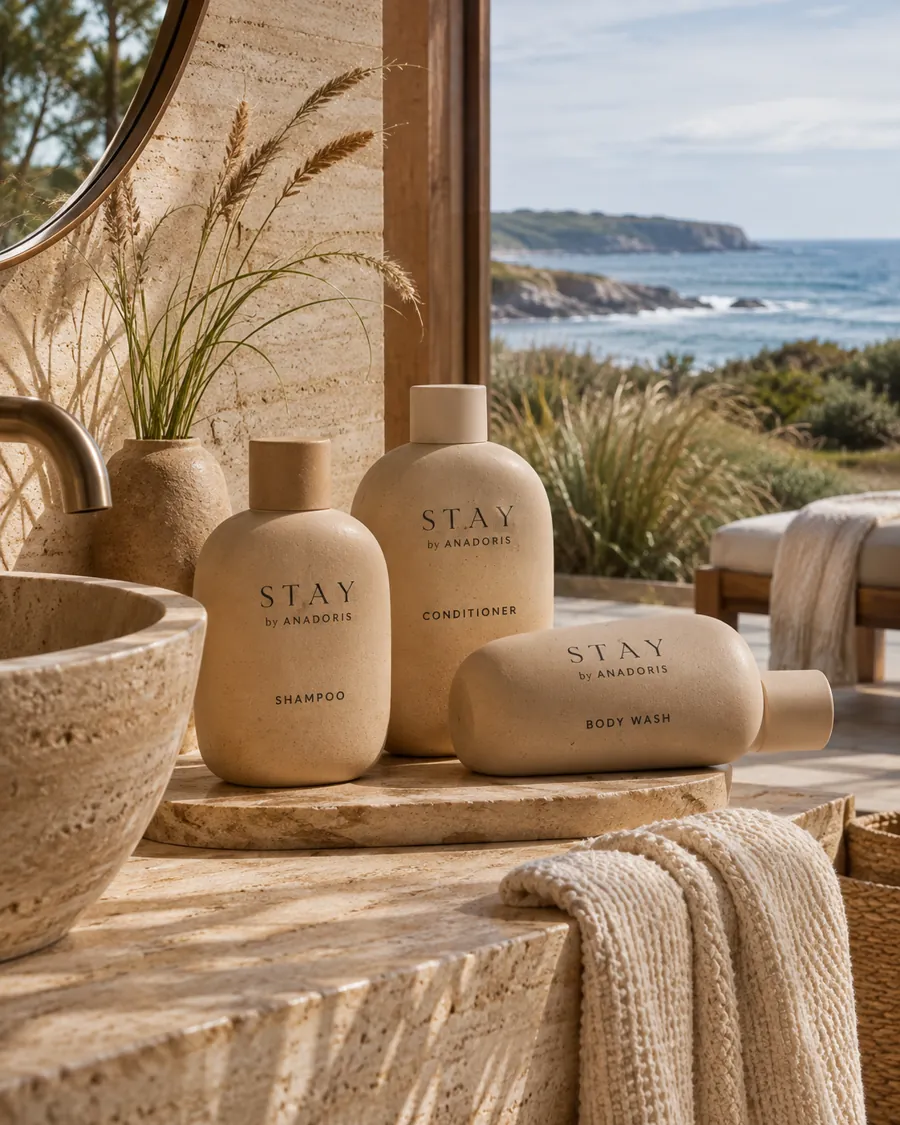
Shape affects grip, how the bottle stands on a wet ledge, how it fits a dispenser bracket and how much space it takes in a carton. Test a sample with wet, soapy hands. Round bottles roll; tall narrow bottles tip over; square bottles pack efficiently.
Size follows use. Miniatures suit single stays, larger pump bottles suit bathrooms with fixed points, and refill packs suit dispensers. Fill sizes can range widely, from very small formats of around 3 ml to bulk containers of up to 25 litres, so pick the size that matches the stay and the restocking routine rather than a default. See how hotels decide between miniatures and dispensers.
What about sustainability?
Ask about recycled content, mono-material construction (bottle, cap and label from compatible materials) and refillable formats. A larger refillable bottle often reduces packaging per use more than any change of material. Claims about recyclability depend on local collection and should be worded carefully; see sustainability and recyclable packaging for hotel amenities.
Practical checks before approving a bottle
- Does the formula suit the material, and has compatibility been checked?
- Does the bottle stand steadily when partly empty?
- Can the label or print area hold all required text at a readable size?
- Does it fit the cap or pump you want, and any wall bracket?
- Does it survive a drop onto a tiled floor?
- Will the same bottle be available for reorders?
The last point is often missed. A bottle that is discontinued forces new artwork and new approvals. Ask whether the bottle is a long-running stock item.
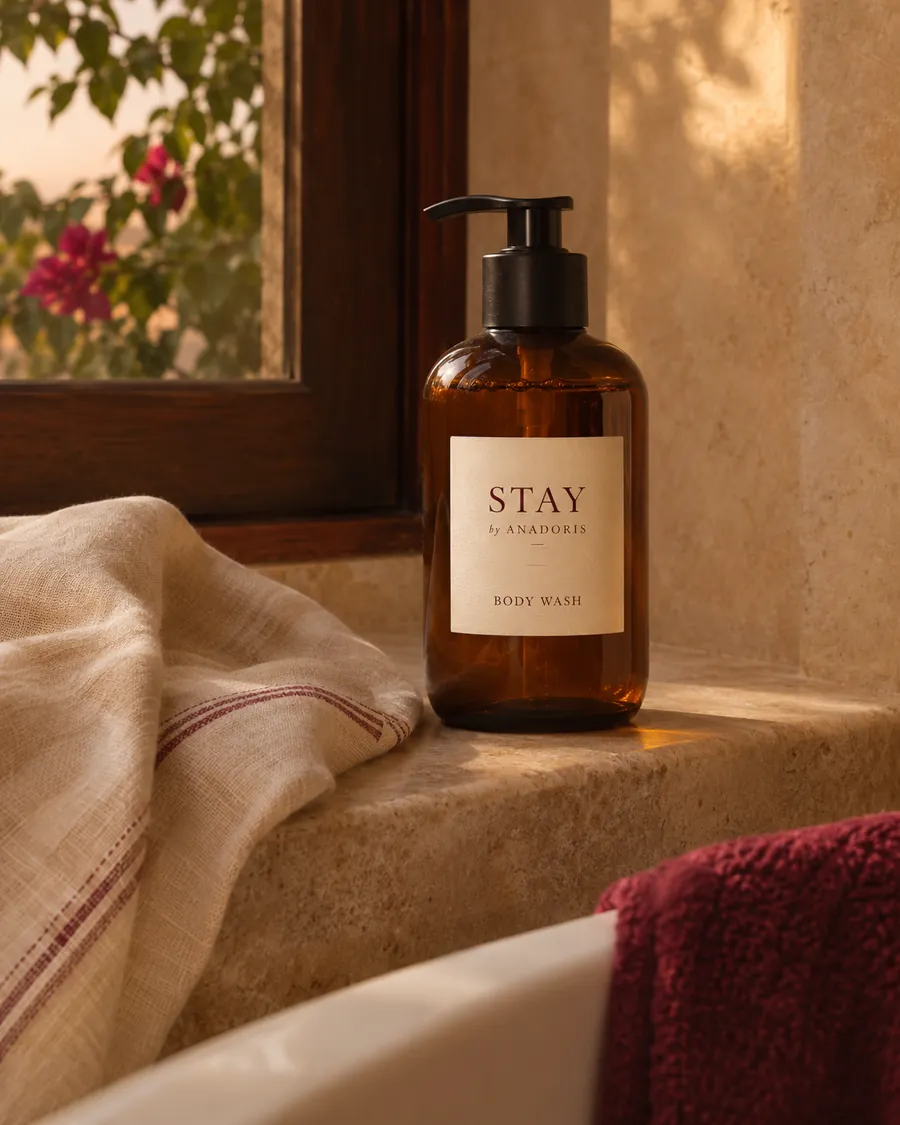
Also ask for the bottle's technical sheet. It normally states the material, neck finish, capacity when filled to the brim and the nominal fill. The neck finish decides which caps and pumps fit, and the difference between brim capacity and nominal fill decides how full the bottle looks. A bottle that looks half empty on the shelf, even when correctly filled, disappoints guests and customers.
How does the bottle affect the rest of the project?
The bottle is the first physical decision, and many others depend on it:
- Artwork: the printable or labelling area sets how much text and branding fits.
- Closure: the neck finish limits the caps and pumps you can choose.
- Cartons and shipping: the footprint sets how many fit in a case and on a pallet.
- Dispensers: if bottles will sit in brackets, the shape must suit the bracket.
Fix the bottle before you finalise artwork, closures or outer cartons. Changing it later usually means repeating those steps.
Putting it together
Choose one bottle family for the whole range where you can, varying only size or colour. It looks coherent, simplifies artwork and helps reach minimums. Then decide the order of decisions: formula and use first, material second, shape and size third, decoration last. Working in that order stops a favourite shape from forcing compromises on the formula.
Before final approval, line up the filled samples together in the place they will be used. A bottle that looks right on a desk can look small on a wide basin or crowded in a shower niche. Photograph the line-up and share it with whoever signs off, so the decision is made on how the range looks together rather than one bottle at a time. You can explore bottle and decoration combinations in the design-your-collection configurator before requesting samples.
Questions on this topic
Is glass a good choice for hotel bathrooms?
Glass looks premium but can break on tiled floors, so many hotels choose glass-look plastics or aluminium for in-room use and keep glass for retail.
Does a custom bottle shape need a mould?
Usually yes. A new shape normally needs tooling, which adds cost, time and approval steps.
Should every product use the same bottle?
Using one bottle family across the range keeps it coherent and simplifies artwork and minimums, with size or colour changes to tell products apart.
Keep reading
- Private label, white label or bespoke: what is the difference?
- How do you brief a private-label manufacturer?
- How to choose a fragrance for an own-brand amenity range
- Caps, pumps and closures: choosing for an own-brand range
- How to stock an Airbnb bathroom
- Hospital and clinic bathroom amenities: what to consider
- Gym locker room amenities: a practical checklist
Looking for supply? See Hotels & resorts, browse the product range or request samples.