

Guide
How to choose a fragrance for an own-brand amenity range
Choose an own-brand fragrance by deciding first whether you will use a manufacturer's library scent, adapt one or commission a new one, then testing a short list in the products and places it will actually be used. The best fragrance is the one that fits your brand, works in every product in the range and can be made the same way on every reorder.
By Hemang Jain, Founder, Anadoris
What are your fragrance options?
An own-brand range can carry a fragrance from one of three sources:
- Library fragrance: a scent the manufacturer already uses and can supply. It is proven in its formulas and quickest to sample.
- Adapted fragrance: a library scent adjusted, for example made lighter, warmer or less sweet, to suit your brief.
- Commissioned fragrance: a scent created to your brief, often with a perfumer, which can become a signature fragrance used beyond the bathroom.
How do the options compare?
This table compares the three fragrance routes for an own-brand range. Ownership and exclusivity depend on your agreement.
| Point | Library | Adapted | Commissioned |
|---|---|---|---|
| Distinctiveness | Shared with other buyers | Partly distinctive | Most distinctive |
| Sampling effort | Lowest | Moderate | Highest |
| Exclusivity | Unlikely | Sometimes, by agreement | Most likely, by agreement |
| Risk in formulas | Already tested | Needs retesting | Needs full testing in each product |
| Good for | First ranges and small brands | Brands wanting a twist | Brands building a sensory identity |
How does fragrance fit an own-brand identity?
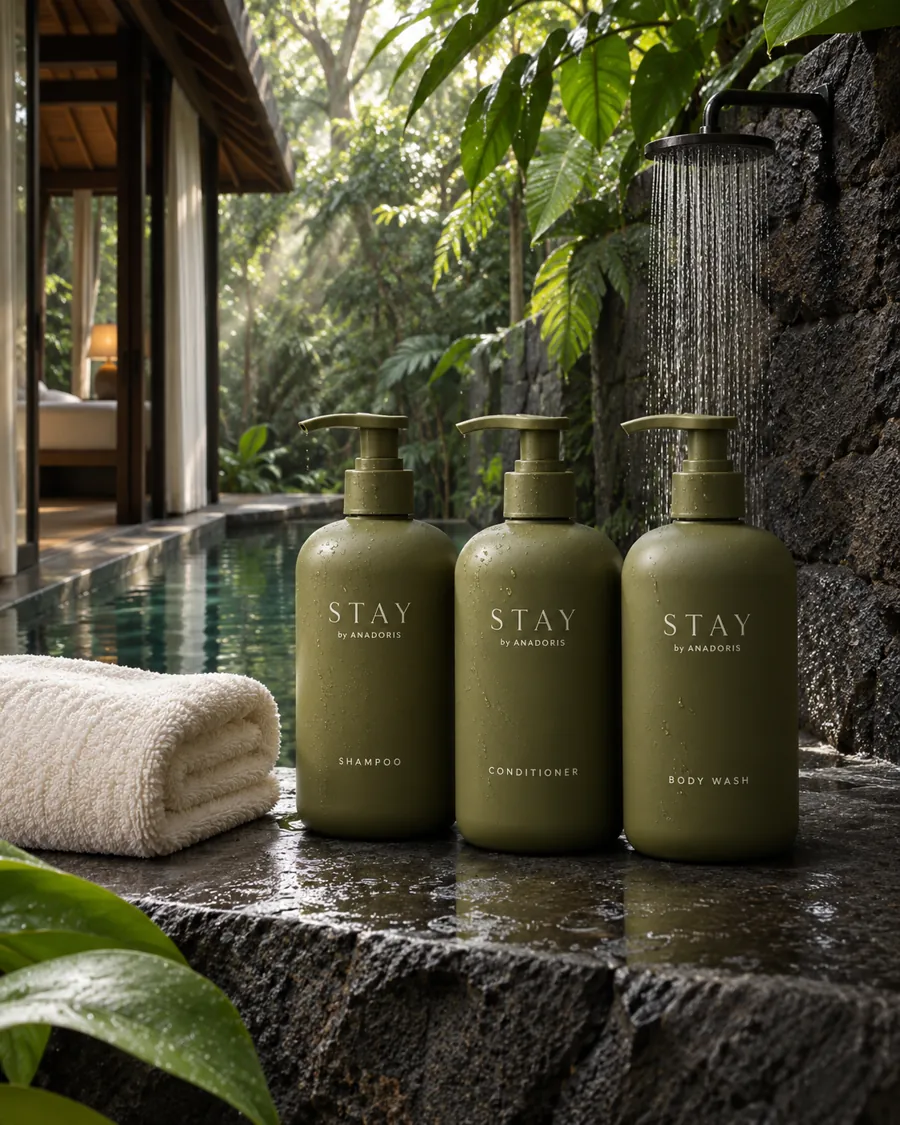
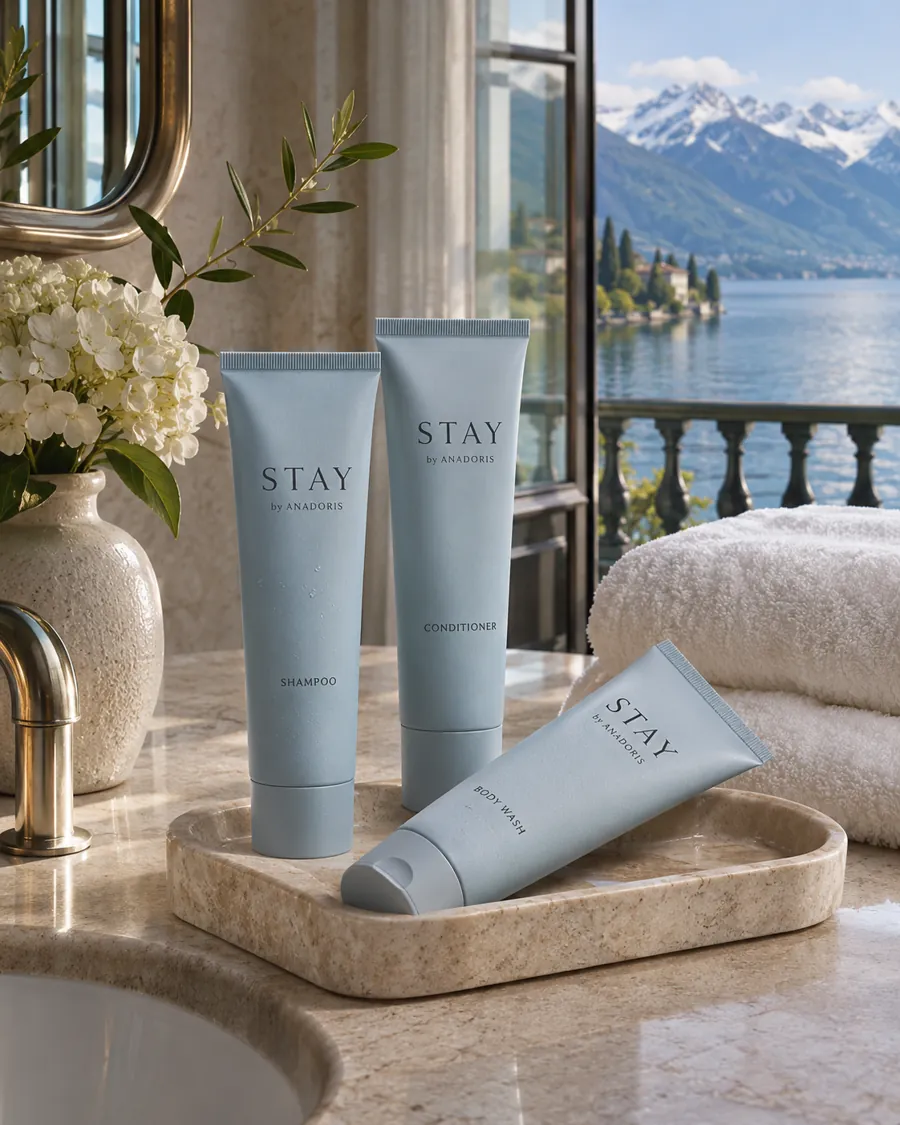
A fragrance is part of the brand, not just a product feature. Ask what the brand would smell like if it were a place: a garden, a library, a seaside villa or a spice market. Then test whether the scent matches the interiors, the typography and the tone of voice.
For guest-facing ranges, lighter and cleaner scents are usually accepted by more people. Strong, sweet or very distinctive scents can delight some guests and put off others. For retail products, a slightly more characterful scent can help the product stand out on a shelf.
Think about climate and setting as well. A warm, resinous scent that suits a mountain lodge can feel heavy in a humid coastal city, and a sharp citrus that feels fresh in a gym can feel thin in a spa. Write the setting into the brief so the fragrance is judged where it will live.
Who should be involved in choosing?
Fragrance is personal, so a large panel tends to pick the least objectionable option rather than the right one. A better approach is a small decision group with clear roles:
- One decision-maker who owns the brand and makes the final call.
- One or two operational voices, such as a housekeeping or spa lead, who know how products are used and what guests say.
- A few outside testers who use the samples without being told which one the team prefers.
Collect reactions in writing using the same few questions for every sample: does it fit the brand, is it pleasant after several uses, is it too strong, and would you notice if it disappeared? Simple, consistent questions give clearer answers than open discussion around a table of blotters.
Why test in every product, not just on a blotter?
A fragrance smells different in shampoo, body lotion and bar soap because each base interacts with it differently. A scent that is lovely on a paper strip may turn flat in a lotion or harsh in a soap.
- Short-list a few fragrances on blotters.
- Ask for samples of the short list in your main products.
- Use them in real showers and basins, with hot water, over several uses.
- Ask people who are not on the project for their reaction.
For a structured approach, see how to test a fragrance in real rooms.
What should you agree before you commit?
- Ownership: who owns the fragrance formula, and whether you can use the scent in candles, diffusers or linen sprays.
- Exclusivity: whether the scent will be offered to others, and in which markets or sectors.
- Consistency: how the fragrance will be checked batch to batch, and what happens if a raw material becomes unavailable.
- Safety information: whether allergen declarations required in your market will be supplied for the label.
Ask, too, how the fragrance level is set in each product. A lotion may need a different dose from a body wash to smell balanced. Record the approved level for each product in the specification so that reorders match the samples you signed off, rather than relying on memory.
Common mistakes
The most common mistake is choosing a fragrance by committee on blotters alone. The second is choosing a scent so strong that it dominates the room. The third is ignoring the full range: a fragrance must work in every product you plan to sell, not only the one you tested first.
A fourth mistake is leaving ownership until after launch, when a request to use the scent in a lobby diffuser reveals that the right was never agreed.
One fragrance used consistently builds more recognition than several used occasionally. If you are building a range with STAY, you can request fragrance samples through the samples form.
Questions on this topic
Can I use my amenity fragrance in candles or diffusers?
Often yes, but it depends on who owns the fragrance and on your agreement with the fragrance supplier. Confirm the right to use it in other products before you plan them.
Is a commissioned fragrance always exclusive?
Not automatically. Exclusivity should be written into the agreement, including its scope and duration.
Why does the same fragrance smell different in different products?
Each formula base interacts with the fragrance differently, so the scent can soften, sharpen or change character. That is why testing in every product matters.
Keep reading
- Private label, white label or bespoke: what is the difference?
- How do you brief a private-label manufacturer?
- Choosing bottle shape and material for a private-label range
- Caps, pumps and closures: choosing for an own-brand range
- How to stock an Airbnb bathroom
- Hospital and clinic bathroom amenities: what to consider
- Gym locker room amenities: a practical checklist
Looking for supply? See Hotels & resorts, browse the product range or request samples.