

Guide
Own-brand retail and minibar products: how should you plan them?
Own-brand retail and minibar products are sold rather than given, so they need retail-grade packaging, full consumer labelling and a clear reason for a guest to buy. The best ranges start from the in-room products guests already like and offer them in sizes and packs suited to taking home.
By Hemang Jain, Founder, Anadoris
How do retail products differ from in-room amenities?
This table compares in-room amenities with retail and minibar products carrying the same brand.
| Point | In-room amenities | Retail and minibar |
|---|---|---|
| Purpose | Part of the stay | A purchase or gift |
| Size | Miniatures or dispensers | Full or travel sizes chosen for home |
| Packaging | Practical, robust | Display-ready, often with a carton |
| Labelling | Full labelling for the market | Full consumer labelling, plus barcodes where sold through tills |
| Presentation | On a basin or tray | On a shelf, in a gift box or minibar |
| Range size | Core bathroom set | A few best sellers and gift sets |
Why build retail on the in-room range?
Guests buy what they already know. A guest who enjoyed the body wash during a stay is far more likely to buy it than a product they have never tried. Using the same fragrance and identity across in-room and retail products turns every stay into a free sample.
It also simplifies production. Retail products can share fragrance and, sometimes, formulas with in-room products, so they fit into existing batches and approvals. New retail-only formulas add development work and are best left until the core retail line has proved itself.
A simple card in the room saying the products are available to buy, and where, is often all it takes to start sales.
Think about who buys. Leisure guests often buy for themselves or as a souvenir; business guests may buy a small gift on the way home; wedding and event guests may want favours in quantity. Each group points to a different pack, and knowing which group matters most at your property keeps the first range focused.
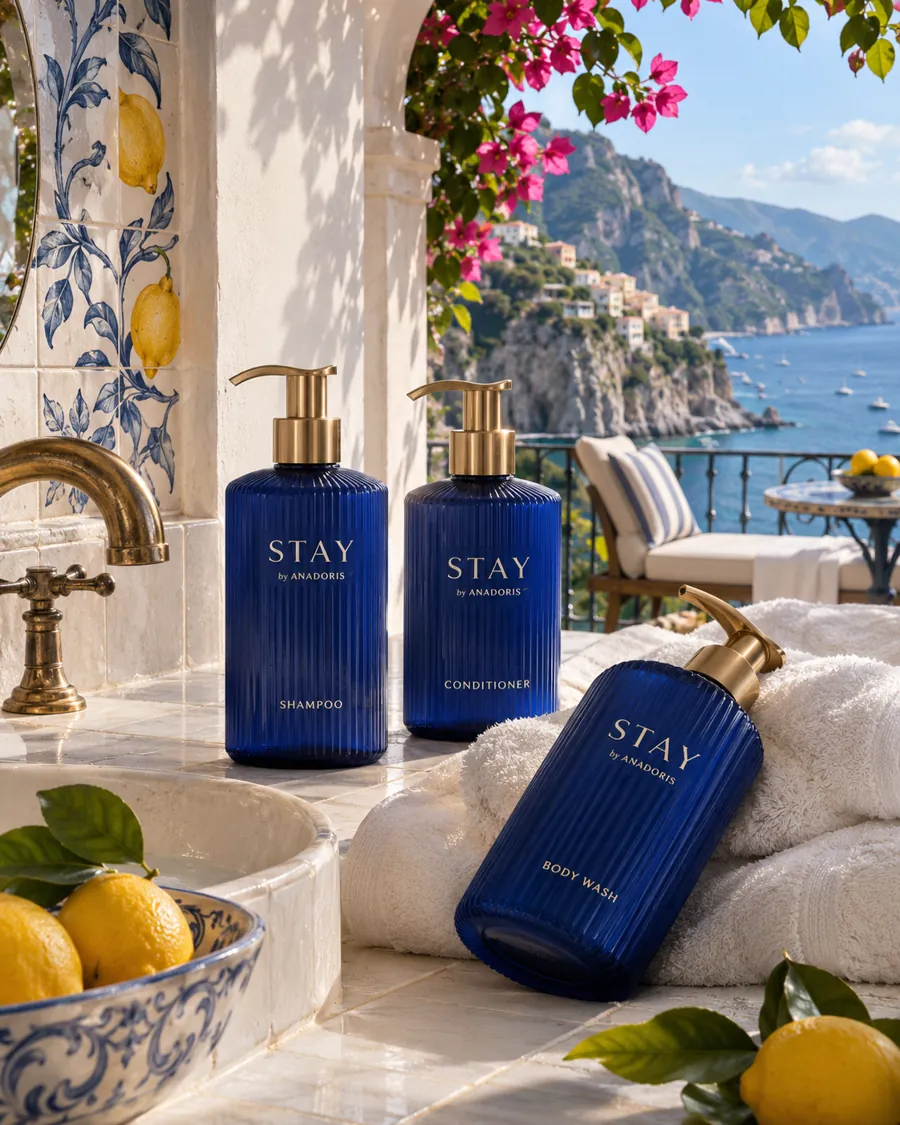
Which products sell best?
- The signature product: often the body wash or body lotion with the property's scent.
- Hand cream: small, giftable and useful.
- Gift sets: two or three products in a box, for guests buying presents.
- Home fragrance: a room spray or diffuser in the signature scent, if your fragrance rights allow.
- Travel sets: small sizes for guests heading onward.
Start with two or three items. A crowded retail shelf with slow-moving stock looks worse than a small, well-chosen display. See selling your amenity range in the hotel boutique.
What changes in packaging and labelling?
Retail packaging is seen and judged before purchase. A carton, a heavier bottle or a better closure may be worth it for retail even if in-room products stay simpler. Make sure the products look like one family with the in-room range.
Labelling must meet consumer requirements in the market where the product is sold: ingredients, contents, the responsible business, batch code and date marking or period-after-opening symbol, as applicable. If products are sold to guests from other countries, consider whether any additional language is helpful. Check requirements with your market's regulator; in the EU, for example, Regulation (EC) No 1223/2009 sets cosmetic labelling rules and requires a Responsible Person.
Barcodes matter if products pass through a till or are sold online. Agree who registers and allocates them, and leave space for them in the artwork from the start rather than squeezing them onto a finished design.
What about minibar personal-care items?
Some hotels add small personal-care items to the minibar or an in-room menu: a premium lotion, a lip balm, a travel kit or a forgotten-item set. These sit between free amenities and retail.
- Keep them small and clearly priced.
- Make them distinct from free amenities, so guests do not feel charged for basics.
- Check that the minibar's warmth does not affect the products.
- Track sales and replace slow items.
See room-service and minibar add-ons that sell.
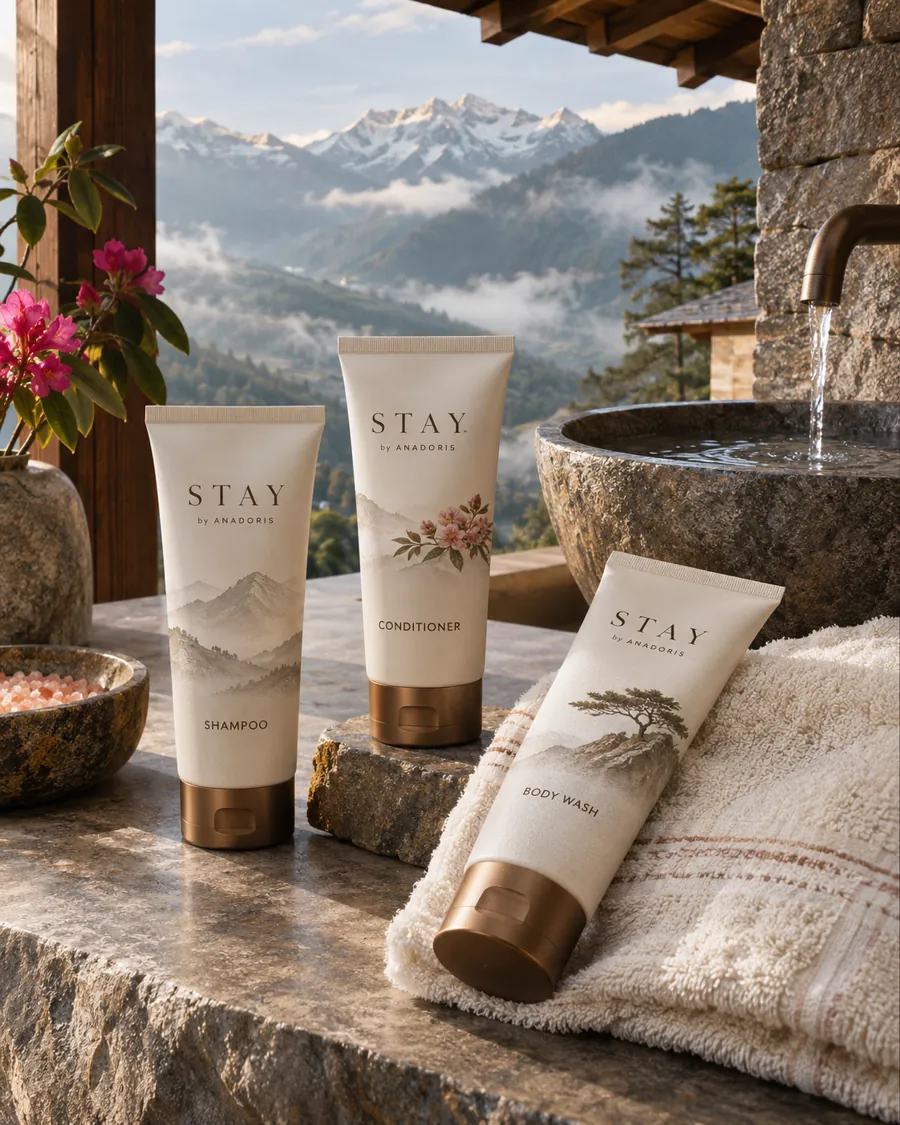
How do you set prices without guessing?
Work from your costs and your guests. Add the unit cost of the product and its packaging, a share of display and storage costs, and the margin you need. Then compare the result with what similar products sell for in your market and with what your guests already pay in your shop.
Review prices after the first season, using actual sales. For a fuller method, see pricing products for hotel retail.
Planning the first retail order
Retail volumes are usually smaller than in-room volumes, so minimums matter. Retail products that share fragrance and bottle with in-room items can sometimes ride on the same production planning. Ask your manufacturer how retail sizes fit with your existing products. For STAY's retail options, see private label.
Plan the display as part of the project. A small shelf near reception, a tray in the spa or a page in the in-room directory each needs its own presentation, and products that are hard to find do not sell however good they are.
Questions on this topic
Can hotel amenities be sold in the hotel shop?
Yes, if the retail versions carry full consumer labelling for your market and suitable packaging.
What is the best first retail product for a hotel?
Often the signature body wash, body lotion or hand cream in the property's scent, because guests already know it from their stay.
Should minibar personal-care items be free?
Most hotels keep basics free and charge for premium or forgotten-item products, making the difference clear to guests.
Keep reading
- Private label, white label or bespoke: what is the difference?
- How do you brief a private-label manufacturer?
- How to choose a fragrance for an own-brand amenity range
- Choosing bottle shape and material for a private-label range
- How to stock an Airbnb bathroom
- Hospital and clinic bathroom amenities: what to consider
- Gym locker room amenities: a practical checklist
Looking for supply? See Hotels & resorts, browse the product range or request samples.