

Guide
Own-brand amenities for short-stay and holiday-let operators
Short-stay operators get most from own-brand amenities by choosing formats that survive self check-in and infrequent cleaning, such as branded pump bottles or refillable dispensers, and by pooling demand across units to reach minimums. The products become one of the few physical brand touchpoints in a stay with little staff contact.
By Hemang Jain, Founder, Anadoris
Why do own-brand amenities matter for short stays?
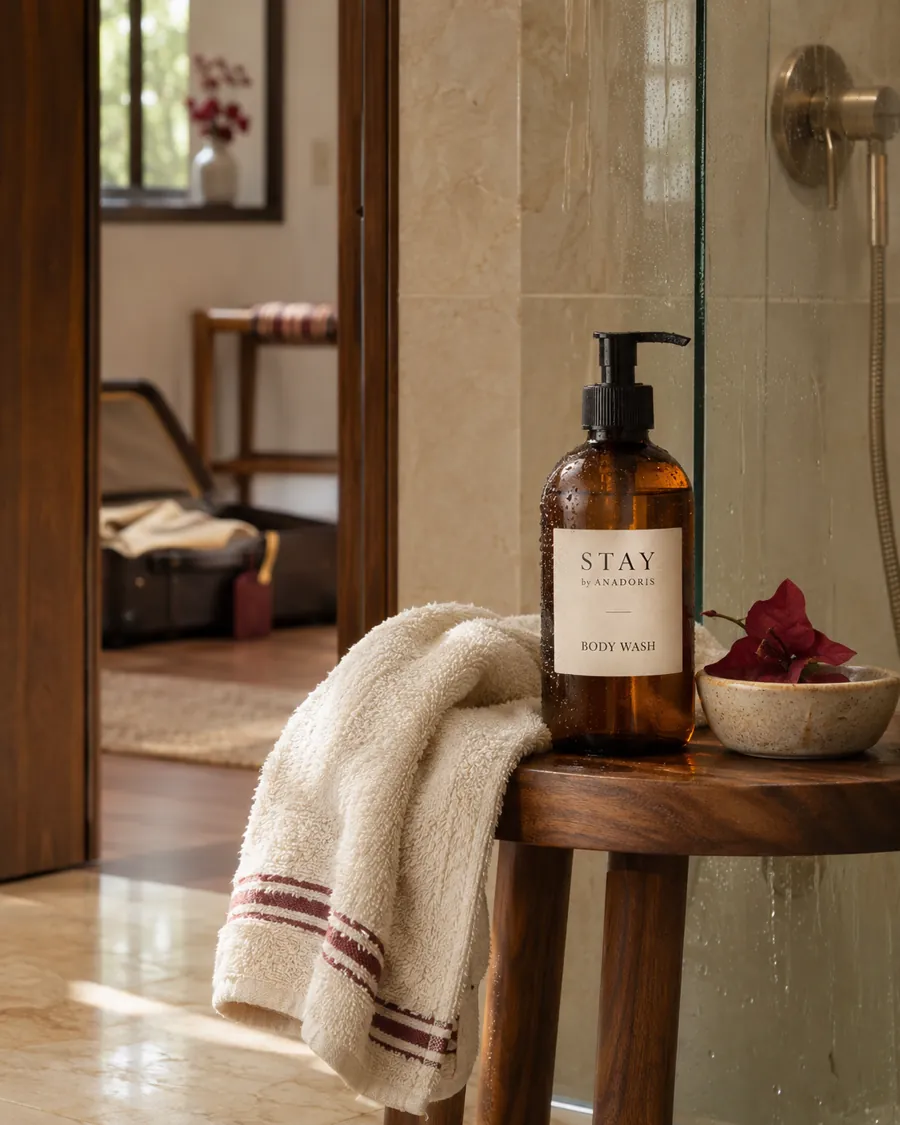
In a short-stay apartment or holiday let, guests may never meet a member of staff. Check-in is by code, communication is by message and cleaning happens between stays. The bathroom products are one of the few things guests touch that carry the operator's identity, so they do more brand work than in a staffed hotel.
Own-brand products also help reviews. Guests often mention bathroom products, and a consistent, good-quality range across every unit tells them the operator is organised. For operators managing units under one brand, it is also a simple way to make different properties feel connected.
Finally, own-brand amenities can replace a mix of supermarket products bought unit by unit, which saves cleaning teams time and removes the inconsistency guests notice between stays.
Which formats suit self check-in units?
This table compares amenity formats for short-stay units. The right choice depends on stay length, cleaning frequency and how many units you manage.
| Format | Strengths | Weaknesses | Often suits |
|---|---|---|---|
| Branded pump bottles | Look homely and premium, easy to brand | Can be taken or emptied, need checking between stays | Apartments with regular turnover cleaning |
| Wall dispensers with refills | Hard to remove, low waste, consistent | Less homely look, need fixing to walls | Larger portfolios and longer stays |
| Miniatures | Fresh for each guest, take-away | Packaging waste, frequent restocking | Short stays and premium units |
| Welcome kit | Combines amenities with other items | Assembly effort | Branded arrival experiences |
What should the range include?
- Core bathroom: shampoo, conditioner, body wash and hand wash.
- Comfort items: body lotion, especially for longer stays.
- Kitchen: washing-up liquid and hand wash carrying the same brand, if your manufacturer makes them, for a consistent look.
- Dry items: dental kits and shower caps on request rather than by default.
For longer stays, larger sizes reduce restocking during the stay. For very short stays, miniatures or small pump bottles are simpler. See amenities for serviced apartments and how to stock an Airbnb bathroom for the wider list.
Keep the fragrance light. Short-stay guests often include families, groups and guests staying for work, and a gentle, clean scent suits more of them than a strong signature. It also lingers less in small apartments where the bathroom opens onto the living space.
How do you reach minimums across a portfolio?
Branded ranges usually carry minimums of around 5,000 units per product, confirmed with the quotation. A single holiday let will not reach that alone, but a portfolio of units often can, especially with refillable formats where one refill serves many stays.
- Estimate use per stay for each product.
- Multiply by expected stays across all units.
- Compare with the minimum and with how long you are willing to hold stock.
- Reduce the range or share a bottle across products if the numbers do not work.
Operators with very few units may find co-branding a stock collection, or a small branded label on a neutral bottle, a better first step.
Refill packs also count towards volume more efficiently than miniatures, because one production run of refills can supply many units for a long period.
How should cleaning teams handle own-brand products?
Short-stay cleaning is often done by contractors working to tight turnaround times. Make the routine simple:
- A clear standard: which products go where, and what level triggers a refill or replacement.
- A photo card in each cleaner's kit showing the finished bathroom.
- A central store or locked cupboard per building for refills.
- A simple count at each turnover, logged in whatever system you already use.
Partly used bottles left between stays are a judgement call. Many operators top up pump bottles from refills rather than replacing them, which reduces waste, but the bottle must be clean and the routine hygienic.
How do you stop products disappearing?
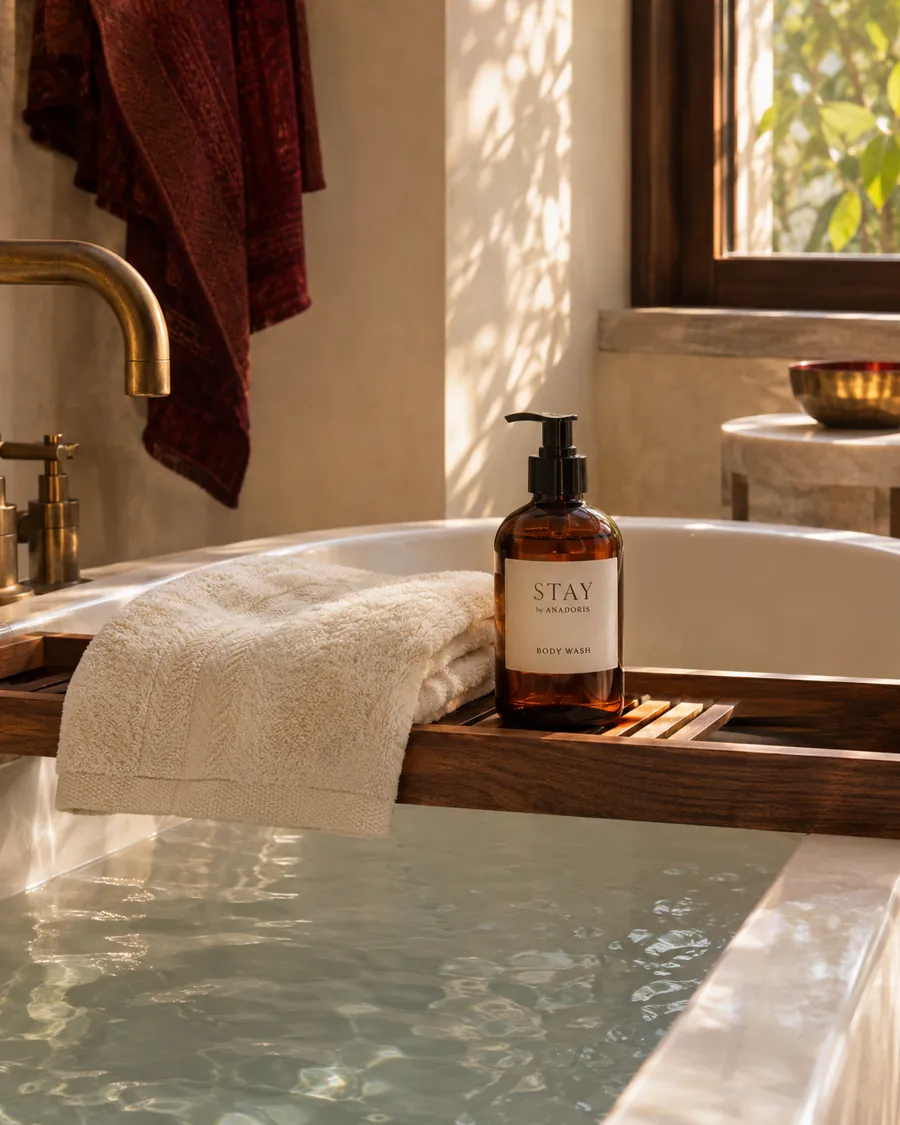
Guests do take products, especially attractive pump bottles. Some operators accept this as marketing; others prefer formats that stay put. Wall dispensers, bottles in fixed holders or larger, heavier sizes reduce loss. A small note offering retail sizes, or a link to buy, turns that interest into a sale rather than a missing bottle.
Track loss by unit for a few cycles. If one property loses far more than others, the format there may need to change.
Getting started
Start with the core bathroom products in one format across all units, in one fragrance that suits your brand. Use the design-your-collection configurator to picture options, and see refill systems if dispensers suit your units.
Review guest messages and reviews after the first few months. Comments about the products, positive or negative, are the quickest guide to whether the fragrance, format and sizes are right before you place a larger order.
Questions on this topic
Can a single holiday let have own-brand amenities?
A single unit will rarely reach private-label minimums alone. Co-branding a stock collection or labelling a neutral bottle may suit better until the portfolio grows.
Should short-stay units use dispensers or bottles?
Branded pump bottles look more homely, while wall dispensers resist removal and reduce waste. Many operators choose by stay length and how often units are cleaned.
Is it hygienic to refill pump bottles between stays?
It can be, if bottles are cleaned and refilled under a clear routine. Some operators prefer sealed refill systems for that reason.
Keep reading
- Private label, white label or bespoke: what is the difference?
- How do you brief a private-label manufacturer?
- How to choose a fragrance for an own-brand amenity range
- Choosing bottle shape and material for a private-label range
- How to stock an Airbnb bathroom
- Hospital and clinic bathroom amenities: what to consider
- Gym locker room amenities: a practical checklist
Looking for supply? See Hotels & resorts, browse the product range or request samples.