

Guide
How do you name an own-brand amenity range?
Name an own-brand amenity range by choosing a route, such as your property name, a descriptive range name or an invented name, then checking that the name is free to use in your markets, works on small packs and leaves room for product names. A good range name is short, easy to say and legally safe to use.
By Hemang Jain, Founder, Anadoris
Do you need a separate range name?
Not always. Many hotels simply use the property or group name on amenities. That is clear and reinforces the main brand. A separate range name makes sense when the products will be sold at retail, used across several brands within a group or extended into other products such as home fragrance.
A range name can also give products their own personality. A spa range might carry a name that suggests calm, while the hotel's name appears smaller as an endorsement.
Think about how the range might grow. A name tied closely to one property can feel awkward if the products later appear in a second hotel or online. A name that works for the brand's future, not only its present, avoids a rename later.
Which naming routes are common?
This table compares common naming routes for own-brand ranges.
| Route | Example style | Strengths | Watch for |
|---|---|---|---|
| Property name | The hotel's own name | Clear, reinforces the brand | Less flexible for retail beyond the property |
| Property name plus descriptor | Hotel name with a word such as Bath or Spa | Clear and adds meaning | Can be long on small packs |
| Descriptive name | A word describing place or mood | Easy to understand | Harder to protect as a trade mark |
| Invented name | A coined word | Distinctive, easier to protect | Needs explaining at first |
| Place-inspired name | A local landmark or region | Tells a story | Check that the place name may be used |
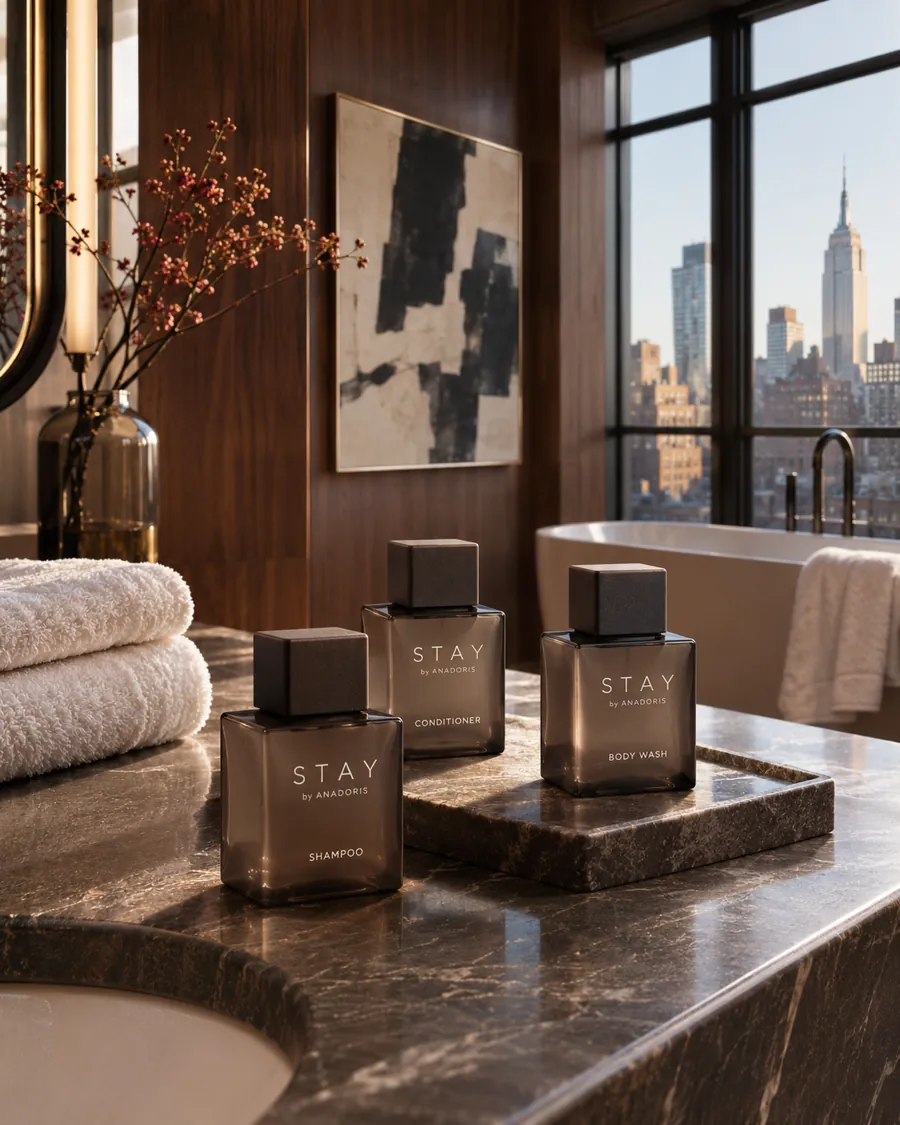
How should you check a name is free?
- Search trade mark registers in each market where you will use or sell the products.
- Search the web and online marketplaces for similar names in personal care.
- Check domain and social media availability if you plan to sell online.
- Check that the name has no unfortunate meaning in the languages of your guests or customers.
- Ask a trade mark professional to review the short list before you commit.
Do this before artwork begins. Renaming after packaging is printed is one of the most costly corrections in a private-label project.
Keep a record of the searches you made, with dates and results. If a question about the name arises later, it shows the checks were made in good faith.
How should individual products be named?
Product names should be plain. Guests in a steamy shower need to tell shampoo from conditioner instantly. Use clear functional names, such as Shampoo, Conditioner, Body Wash and Body Lotion, and let the range name and fragrance name carry the personality.
- Keep the same order on every pack: range name, fragrance or collection, product function.
- Use consistent spelling and capitalisation.
- Avoid creative product names that hide the function.
- Consider guests who do not read the label's language, with colour or icon cues.
Settle naming conventions for sizes too. Whether a product is called a travel size, a mini or a retail size, use the same words on packs, price lists and websites, so staff and customers are never unsure which product is meant.
Should the fragrance have a name?
A named fragrance helps when you sell retail products or use the scent across the property. Names that evoke a place or mood, rather than a list of notes, are easier to remember. If you plan more than one fragrance, create a naming pattern so later scents fit. See signature fragrance for how a scent becomes part of the brand.
Check fragrance names with the same care as range names, since they appear on packs and listings and may also need trade mark checks.
How do you test a name on packs?
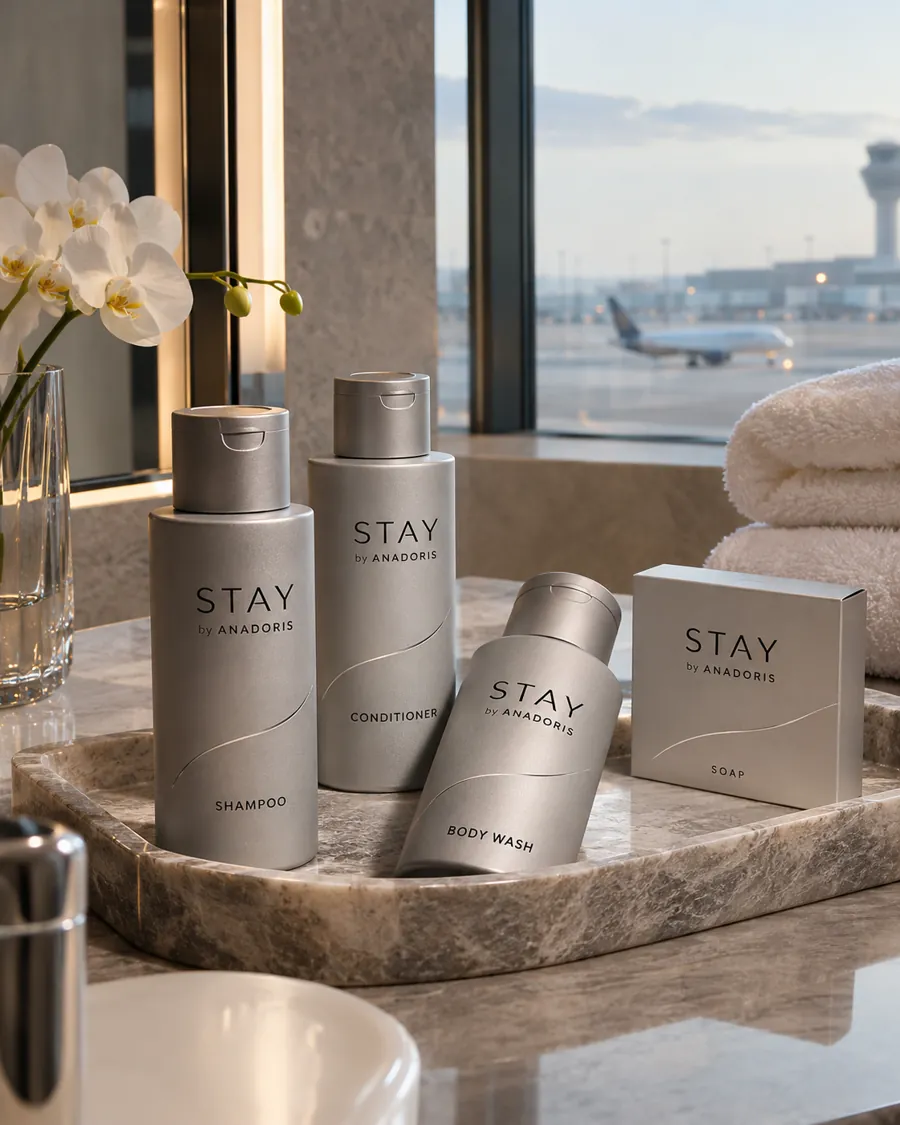
Put the short-listed names on mock-ups of your actual bottles, at real size. Long names that look elegant on a screen can be cramped on a miniature. Check legibility in bathroom lighting, check how the name sits with the logo and check that it still reads when the label is wet.
Ask a few people outside the project to read the name aloud. If they hesitate or mispronounce it, guests will too.
Try the name in the places it will be heard and seen beyond the bathroom: on a spa menu, at the reception desk, on an online listing and on a gift card. A name that works in all of them is a name that will last.
Recording the decision
Once chosen, record the name, its approved spelling, the trade mark status in each market and the naming pattern for products and fragrances. Share it with designers and the manufacturer so every component matches. To see names on packs, try the design-your-collection configurator.
Questions on this topic
Should I use my hotel's name on amenities?
Often yes. It is clear and reinforces the main brand, though a separate range name can help if products are sold at retail or across several brands.
Do I need to register a trade mark for my range name?
It is wise to consider it in each market where you use or sell the products. Take advice from a trade mark professional.
What makes a good product name in a hotel bathroom?
A plain functional name, such as Shampoo or Body Wash, shown consistently so guests can identify products quickly.
Keep reading
- Private label, white label or bespoke: what is the difference?
- How do you brief a private-label manufacturer?
- How to choose a fragrance for an own-brand amenity range
- Choosing bottle shape and material for a private-label range
- How to stock an Airbnb bathroom
- Hospital and clinic bathroom amenities: what to consider
- Gym locker room amenities: a practical checklist
Looking for supply? See Hotels & resorts, browse the product range or request samples.