

Guide
How do you keep reorders of your own-brand range consistent?
You keep reorders of an own-brand range consistent by fixing an approved specification for every product, keeping retained samples of approved batches, checking each new batch against both, and requiring notice before any formula, fragrance or component changes. Consistency is a system agreed with the manufacturer, not luck.
By Hemang Jain, Founder, Anadoris
Why do batches drift?
Even a good manufacturer can produce batches that differ slightly. Natural raw materials vary with season and origin. A fragrance supplier may adjust a material. A packaging supplier may change a resin or ink. A label printer may run on a different press. Each change can be small, but guests and staff notice when a familiar product smells, feels or looks different.
Drift is most likely when nobody has written down exactly what was approved. If the only reference is "the samples we liked", every reorder relies on memory.
Small differences also add up across a group. If one property receives a batch that looks slightly different from another property's, guests who visit both may notice, and staff may wonder whether they have received the wrong product. Consistency across sites is as important as consistency over time.
What should the approved specification include?
- Product name, fill size and the formula reference.
- Fragrance reference and its approved level.
- Appearance: colour, clarity and texture.
- Key measurable properties the manufacturer checks, such as viscosity and pH, with acceptable ranges.
- Components: bottle, closure, label and carton, with supplier codes.
- Approved artwork version for each component.
- Packing: units per carton and carton marking.
Ask the manufacturer to share its specification for your products and to confirm that every batch is released against it.
Keep your copy of the specification with the artwork register and the ownership schedule, so everything that defines the product sits in one place. Update it whenever a change is approved, and note the date and the reason.
How do retained samples help?
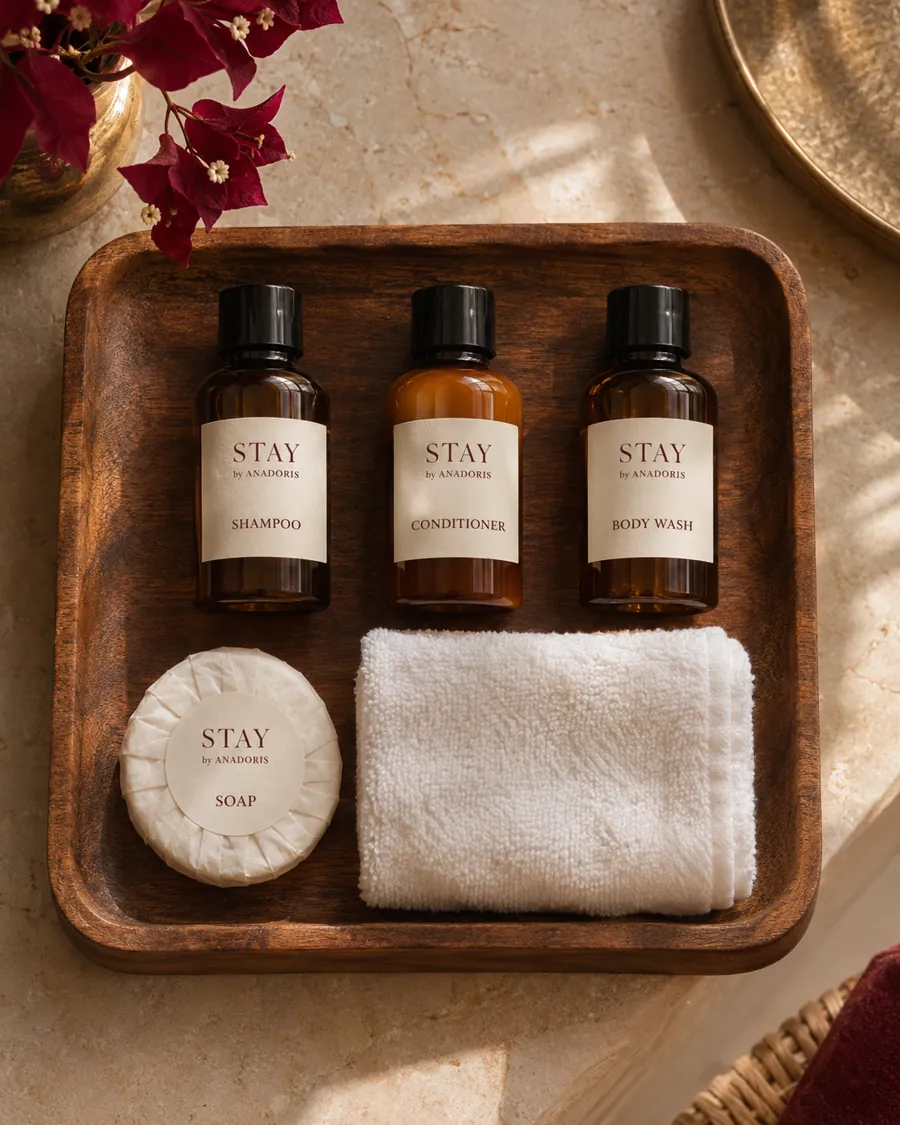
A retained sample is a sealed unit kept from an approved batch as a physical reference. When a new batch arrives, compare it side by side with the retained sample: fragrance, colour, texture, label colour and closure feel.
Keep retained samples in a cool, dark place, labelled with the product, batch code and date of approval. Manufacturers working to cosmetics GMP, such as ISO 22716, normally keep their own retained samples of each batch too, which lets both sides check the same reference.
Keep enough units to compare more than one future batch, and replace retained samples once they approach the end of their shelf life, using units from a later approved batch. An old, degraded reference is worse than none, because it makes a good new batch look wrong.
What checks should you run on arrival?
This table lists simple checks for each delivery of own-brand products and what each one catches.
| Check | How | What it catches |
|---|---|---|
| Fragrance | Compare with retained sample, on skin and in use | Fragrance changes or wrong fragrance |
| Appearance | Compare colour and clarity in daylight | Colour drift or contamination |
| Texture | Dispense and rub between fingers | Thickness changes |
| Artwork | Compare with approved version | Old artwork or print errors |
| Closure | Open, close and dispense several times | Leaks or stiff caps |
| Batch documents | Check the certificate or release record | Batches released without checks |
Why insist on notice of change?
Agree in writing that the manufacturer will tell you before changing the formula, the fragrance, a raw material that affects the product, or any component. Notice gives you time to sample the changed product, update labels if ingredients change, and run down old stock.
Some changes are unavoidable, such as a material that is no longer available. Notice turns them from a surprise into a managed update.
What should you do if a batch differs?
- Stop using the batch in guest areas if the difference is noticeable.
- Record what differs, with photographs and batch codes.
- Compare with the retained sample and the specification.
- Raise it with the manufacturer promptly, with your evidence.
- Agree the cause and the remedy before the next order.
Calm, evidence-based reporting resolves most issues quickly. A good manufacturer wants to know, because the same drift may affect other products.
Keep a simple log of any issues and how they were resolved. Over time it shows whether problems are isolated or recurring, and it gives a new team member the history without relying on memory.
Choosing a manufacturer that can stay consistent
Ask how batches are recorded, how raw materials are checked on arrival, whether retained samples are kept and which quality standards the factory follows. Certifications such as ISO 9001 for quality management and ISO 22716 for cosmetics GMP indicate that these systems exist. STAY's facility and quality approach are described on manufacturing.
Ask to see an example batch record, with confidential details removed, so you understand what is checked and documented before each batch is released.
Questions on this topic
What is a retained sample?
A sealed unit kept from an approved batch as a physical reference, used to compare later batches for fragrance, colour, texture and packaging.
Why does my amenity smell different in a new batch?
Possible causes include variation in natural raw materials, a fragrance supplier change or a different fragrance level. Compare with a retained sample and raise it with the manufacturer.
Which standards help with batch consistency?
ISO 9001 covers quality management and ISO 22716 covers good manufacturing practice for cosmetics, including batch records and retained samples.
Keep reading
- Private label, white label or bespoke: what is the difference?
- How do you brief a private-label manufacturer?
- How to choose a fragrance for an own-brand amenity range
- Choosing bottle shape and material for a private-label range
- How to stock an Airbnb bathroom
- Hospital and clinic bathroom amenities: what to consider
- Gym locker room amenities: a practical checklist
Looking for supply? See Hotels & resorts, browse the product range or request samples.