

Guide
Printed, labelled or sleeved? Decorating own-brand bottles
Own-brand bottles are usually decorated by direct printing, a pressure-sensitive label or a shrink sleeve, and the right choice depends on the look you want, how wet the bottle gets and how often the text will change. Direct print looks most integrated; labels are the most flexible; sleeves cover the whole bottle with full-colour design.
By Hemang Jain, Founder, Anadoris
What are the main decoration methods?
- Screen printing: ink applied directly to the bottle surface, one colour at a time. Clean and durable.
- Pad printing: ink transferred by a soft pad, useful on curved or small surfaces such as caps.
- Pressure-sensitive label: a printed self-adhesive label, which can be paper or film.
- Hot foil stamping: metallic foil pressed onto the surface for a gold, silver or other metallic effect.
- Shrink sleeve: a printed film that shrinks to the bottle's shape and can cover it entirely.
How do they compare?
This table compares common decoration methods for amenity bottles. The best choice depends on bottle material, shape and order volume.
| Method | Look | Wet durability | Flexibility to change text | Notes |
|---|---|---|---|---|
| Screen print | Integrated, no-label look | Good when cured correctly | Low: new screens needed | Best with few colours |
| Film label | Clean, can be clear for a no-label look | Good | High: reprint labels only | Suits multiple products on one bottle |
| Paper label | Natural, textured | Poor in showers | High | Better for dry retail products |
| Hot foil | Metallic accent | Good if protected | Low | Usually combined with print or label |
| Shrink sleeve | Full coverage, full colour | Good | Medium | Changes bottle feel; check recyclability |
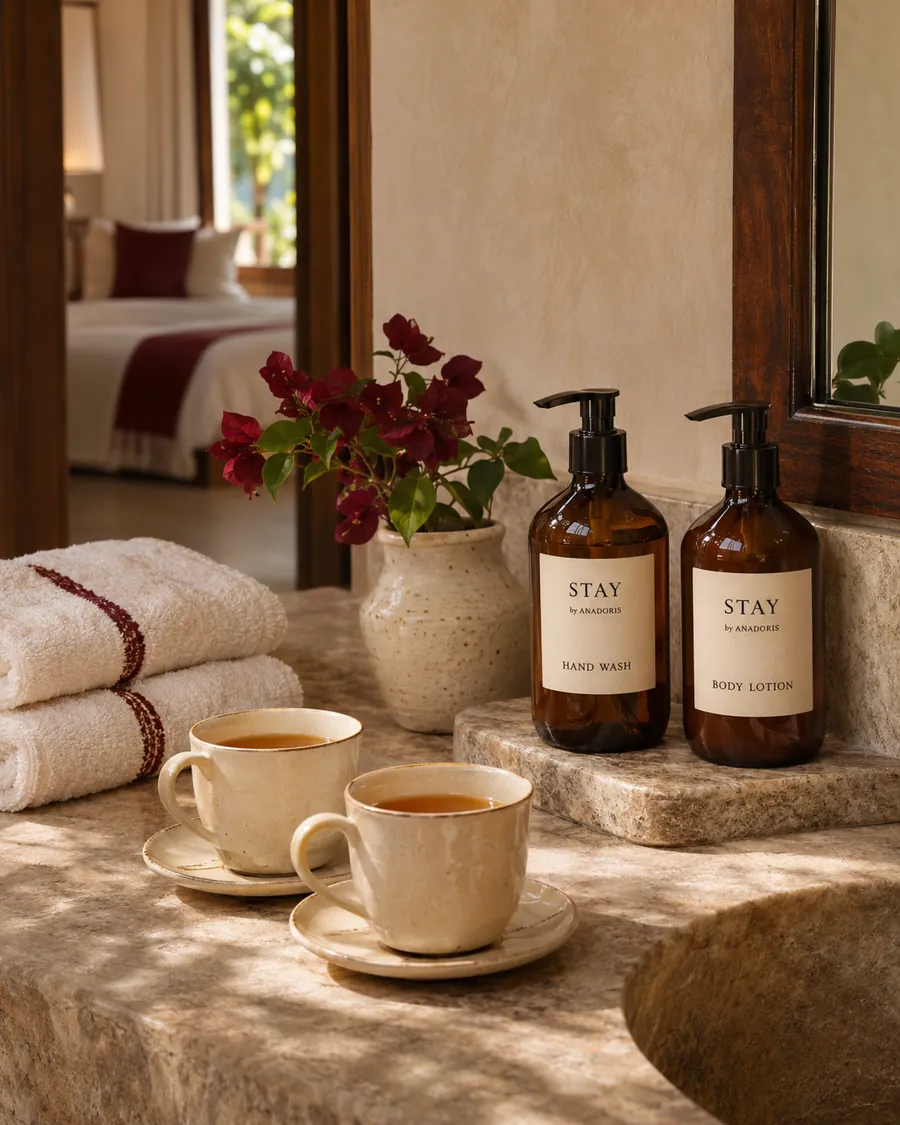
Which method works in a wet bathroom?
Shower and basin products are handled with wet, soapy hands and sit in steam. Paper labels can wrinkle, lift or smudge. Film labels and properly cured screen print generally hold up better. Ask for a rub test with the actual formula: rub the decorated area with product and water and check for fading or lifting.
Metallic effects need protection from abrasion, especially near the area fingers grip.
Check the reverse side too. On clear bottles, the back of a label is visible through the product, and the adhesive pattern can show. A clear film label with a suitable adhesive avoids a cloudy patch behind the brand name.
How much text fits, and where?
An own-brand bottle carries more than a logo. Depending on your market, it may need the product name, function, contents, ingredient list, batch code, a use-by indication or period-after-opening symbol, warnings, and the name and address of the responsible business. On a small miniature, that is a lot of text.
- Front panel: brand and product name, kept clean.
- Back panel or label: ingredients, address, warnings and symbols.
- Base or crimp area: batch code, often added during filling.
- Outer carton: sometimes allowed to carry details that cannot fit on very small containers, depending on your market's rules.
Settle the text before choosing decoration. A screen-printed design with no room for the ingredient list leads to late redesigns. Check the exact requirements with your market's regulator or your manufacturer's regulatory team.
Which method is most flexible?
Labels are the most flexible. One stock bottle can carry different labels for shampoo, conditioner and body wash, and the label can be reprinted when wording changes. This matters because regulatory text, addresses or ingredient lists sometimes change between orders.
Direct print ties the text to the bottle. If one word changes, the print set-up changes too, and existing printed bottles may become unusable. For ranges still evolving, a label is often the safer first choice.
A practical hybrid is to print the brand name directly on the bottle and apply a small label carrying the product name and legal text. The brand looks integrated, while the parts most likely to change stay on a label that can be reprinted cheaply. It also lets one printed bottle serve several products.
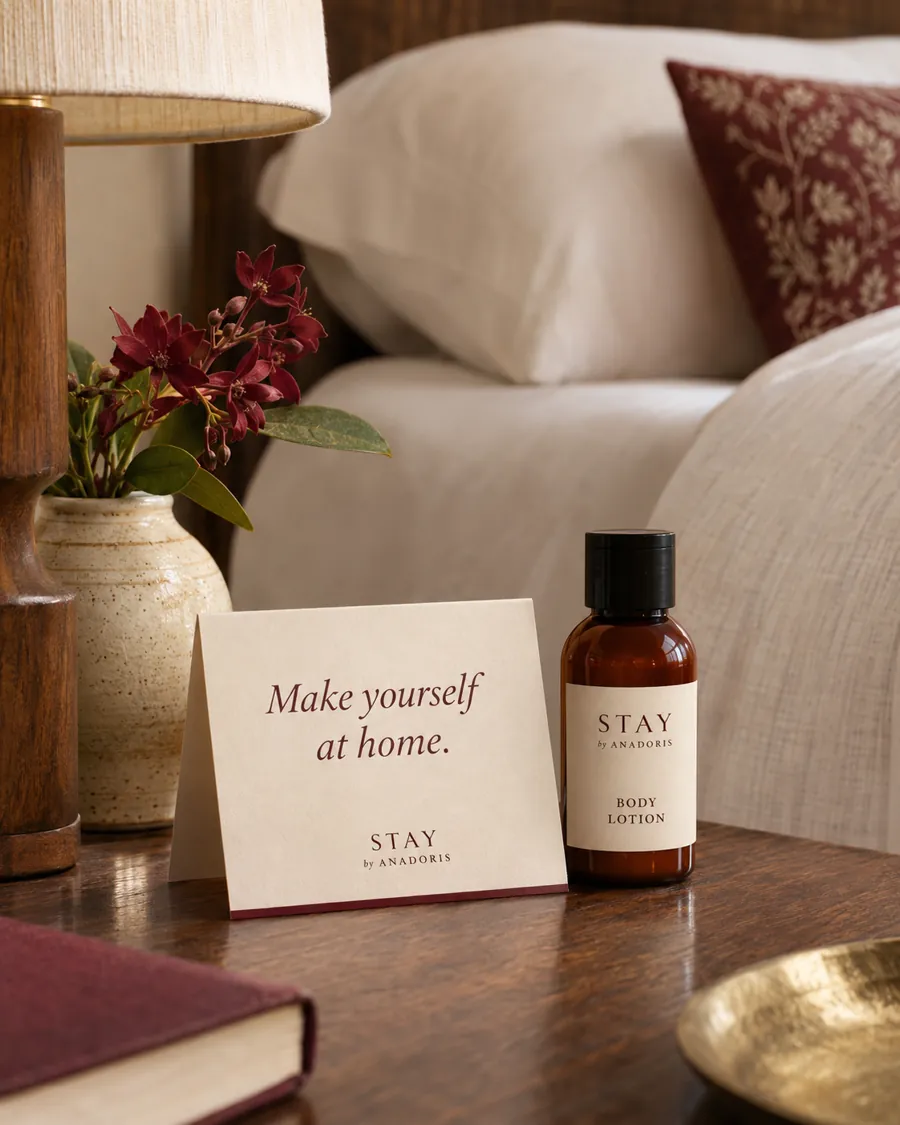
How do colours behave on real packaging?
Brand colours rarely look the same on a bottle as on a screen. Ink sits differently on white, clear and coloured plastics, and a matte finish softens colour while gloss intensifies it. Metallic inks and foils change appearance with lighting.
- Give colour references in a recognised colour-matching system rather than as screen values alone.
- Ask for a printed sample on the actual bottle material.
- View samples under the lighting they will meet: warm bathroom lights, daylight and shop lighting.
- Agree an acceptable range of variation, and keep an approved sample as the standard for future orders.
Colour agreed on a physical sample is far less likely to cause a dispute at reorder.
How do minimums and recycling affect the choice?
Each decorated variant is a separate item with its own minimum. Printing five product names directly onto five bottle runs means five print set-ups. Using a common printed bottle with a small product label can reduce variants.
For recycling, compatible label and bottle materials help, and some sleeves need perforations so they can be removed. Ask what the manufacturer recommends for your markets, and see sustainability.
Then decide in this order:
- Will the text change soon? Choose labels.
- Is the product used in the shower? Avoid paper.
- Do you want a no-label look? Choose screen print or a clear film label.
- Do you want full-colour pattern? Consider a sleeve.
Always approve decoration on a physical sample, not only on screen. You can compare finishes in the design-your-collection configurator and learn more about the process on the private label page.
Questions on this topic
Is screen printing better than a label?
Neither is better in all cases. Screen print looks more integrated, while labels are easier to change and suit ranges whose text may be updated.
Will labels peel off in the shower?
Film labels with suitable adhesive usually hold well, but paper labels can lift. Ask for a rub and soak test with your product.
Can I add gold foil to my bottles?
Yes, hot foil stamping adds metallic accents, but it should be protected from abrasion and approved on a physical sample.
Keep reading
- Private label, white label or bespoke: what is the difference?
- How do you brief a private-label manufacturer?
- How to choose a fragrance for an own-brand amenity range
- Choosing bottle shape and material for a private-label range
- How to stock an Airbnb bathroom
- Hospital and clinic bathroom amenities: what to consider
- Gym locker room amenities: a practical checklist
Looking for supply? See Hotels & resorts, browse the product range or request samples.