

Guide
How can a small D2C brand launch hotel-grade personal-care products?
A small direct-to-consumer brand can launch hotel-grade personal-care products by working with a private-label manufacturer that already supplies hospitality, choosing a tight range built on proven formulas, and adapting packaging and labelling for retail and online sale. The hotel heritage gives the formulas credibility; the brand's job is the story, the presentation and the customer.
By Hemang Jain, Founder, Anadoris
What does hotel-grade mean?
Hotel-grade is an informal term, not a regulated standard. It usually describes products made to the requirements hotels set: consistent performance across large volumes, fragrances that suit many people, formulas that rinse cleanly and packaging that holds up in daily use. It does not mean a product is better than any other; it means it was designed for demanding, repeated use.
Use the term carefully in marketing. Describe what the product actually does and how it was made, rather than implying an endorsement by a hotel you cannot name. Any claim on a cosmetic product should be truthful and supported.
The phrase can still be useful as shorthand for customers who have enjoyed products during a hotel stay and want something similar at home. Explain it on your website in plain words: the formulas come from a manufacturer that supplies hospitality, and are made to the same standards.
Why start from a hospitality manufacturer?
A manufacturer that supplies hotels already has formulas proven at scale, a fragrance library tested with many users and experience of consistent reorders. That lets a small brand start from tested foundations rather than developing everything from scratch.
The manufacturer's standards also matter. Ask which quality systems it works to, such as ISO 22716 for cosmetics good manufacturing practice, and whether it can supply the documentation you need to sell in your market. A small brand rarely has its own laboratory, so it depends on the manufacturer's.
What should the first range include?
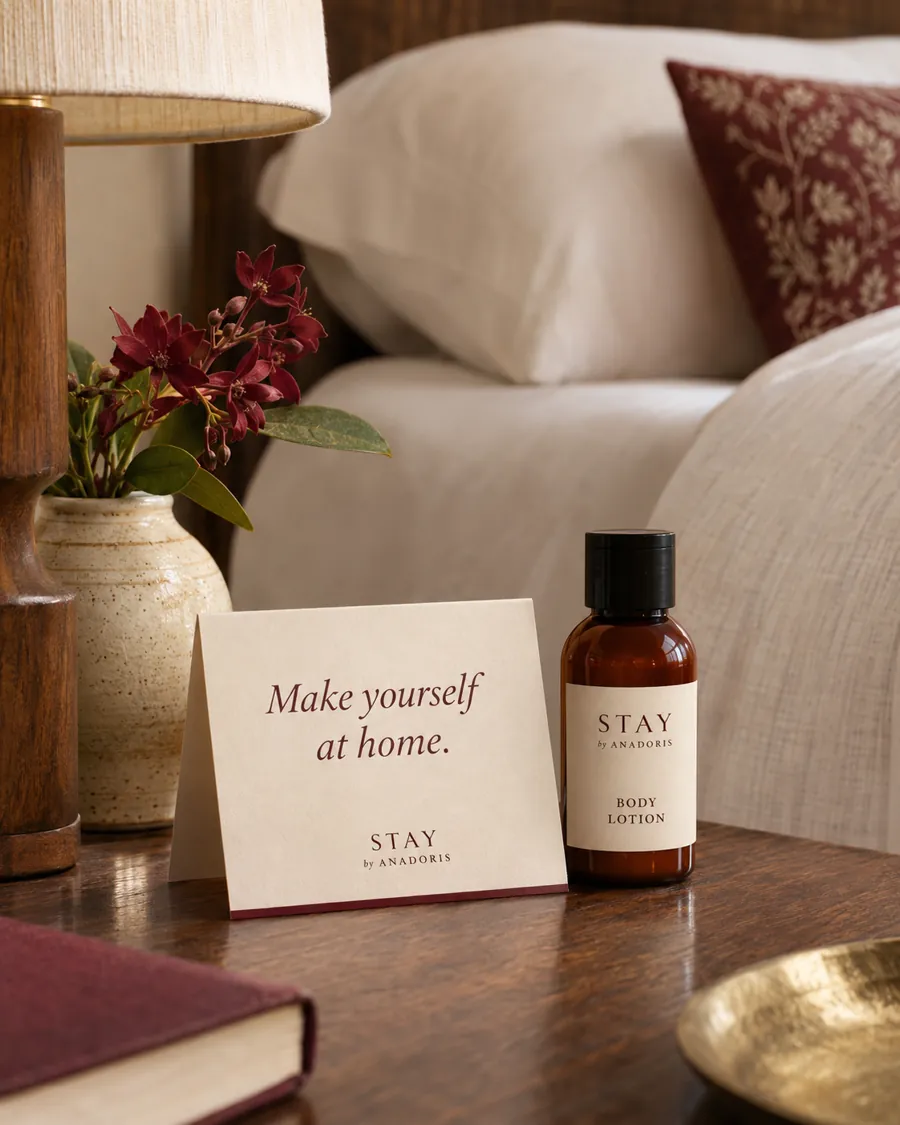
- One hero product that defines the brand, such as a body wash or a hand wash.
- One companion that is used alongside it, such as a body lotion or hand cream.
- Optional gift or travel set once the core sells.
Keeping the range tight concentrates money, stock and marketing on products customers can understand quickly. It also keeps minimums manageable: branded ranges typically start from around 5,000 units per product, confirmed with the quotation, so each product added is a significant stock commitment for a new brand.
Choose the hero product by thinking about the moment customers will use it. A body wash used every morning builds a habit and repeat orders; a special-occasion product may sell as a gift but be reordered less. For a new brand, a daily-use product usually gives the clearest signal of whether customers like it.
How do retail needs differ from hotel needs?
This table compares the requirements of a hotel range and a D2C retail range built on similar formulas.
| Point | Hotel range | D2C retail range |
|---|---|---|
| Pack size | Miniatures and refills | Full sizes chosen for home use |
| Packaging | Robust and practical | Attractive, protective for shipping |
| Labelling | Full labelling for the market | Full consumer labelling, barcodes, online listing information |
| Fragrance | Broad appeal | Can be more distinctive |
| Shipping | Bulk cartons to properties | Single units to customers, so leak-proof closures matter |
| Selling | Included in the room | Must persuade a customer to buy |
What about labelling and responsibility?
As the brand owner selling to consumers, you carry responsibilities for the product in your market. In the EU, Regulation (EC) No 1223/2009 requires a named Responsible Person for each cosmetic product, and products must have a safety assessment and product information file. Other markets have their own rules for registration, labelling and safety. Check requirements with your market's regulator, and ask what documentation the manufacturer provides.
Plan the label from the start: ingredients, contents, address, batch code and date marking or period-after-opening symbol. Online listings should match the label exactly.
How should packaging work for online sales?
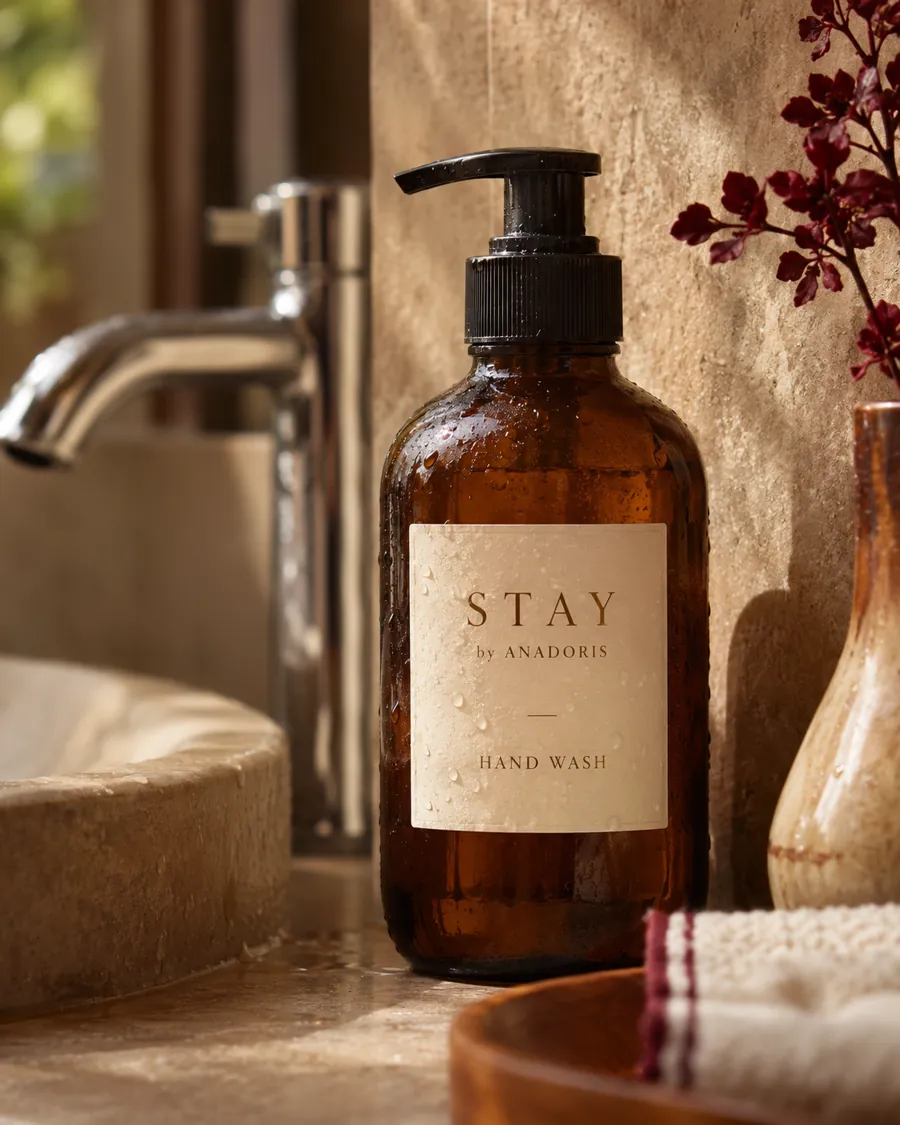
Products sent by post are dropped, squeezed and turned upside down. Choose closures that seal reliably, consider an inner seal or a pump lock, and test a shipped parcel before launch. Packaging that looks beautiful on a shelf but leaks in transit creates returns and poor reviews.
Consider the unboxing too. A simple, well-printed outer box and a card explaining the product can do more for repeat purchase than an expensive bottle.
Plan returns and damaged parcels before launch. Decide what happens to a leaking parcel, how you will replace it and how you will record the cause, so a packaging problem can be fixed quickly with the manufacturer.
Growing sensibly
Grow from evidence. Track which products customers reorder and what reviews say before adding new lines. Add products that share the fragrance and bottle family, so each addition strengthens the brand and fits existing production. Explore formats in the design-your-collection configurator, and see private label for how a small brand can start with STAY.
Keep cash in mind as you grow. Each new product adds a minimum quantity of stock to hold. Adding products slowly, and only once existing products are selling through, protects a small brand from tying up money in slow-moving lines.
Questions on this topic
Is hotel-grade a certified standard?
No. It is an informal description of products designed for consistent, repeated use in hotels, so marketing should describe the product itself rather than rely on the term.
Can a small brand use a manufacturer's existing formulas?
Yes. Private label often uses the manufacturer's proven base formulas with your chosen fragrance, packaging and branding.
Who is responsible for a D2C cosmetic product?
The brand owner usually carries legal responsibility in its market. In the EU, a named Responsible Person is required under Regulation (EC) No 1223/2009.
Keep reading
- Private label, white label or bespoke: what is the difference?
- How do you brief a private-label manufacturer?
- How to choose a fragrance for an own-brand amenity range
- Choosing bottle shape and material for a private-label range
- How to stock an Airbnb bathroom
- Hospital and clinic bathroom amenities: what to consider
- Gym locker room amenities: a practical checklist
Looking for supply? See Hotels & resorts, browse the product range or request samples.