

Guide
How do you add new products to an existing own-brand range?
To add products to an own-brand range, start from the existing specification and artwork system, match the fragrance and packaging family, and run the new items through the same sampling and approval steps as the originals. The aim is that a new product looks and feels as if it was always part of the range.
By Hemang Jain, Founder, Anadoris
Why does adding products need planning?
An established range has a fragrance, a bottle family, a colour palette, a typography system and an approved specification. A new product must fit all of them. If it is developed without reference to what exists, it can arrive slightly off: a warmer label colour, a different cap, a fragrance that smells stronger in its new base.
Guests notice inconsistency more than buyers expect. A conditioner that looks like it came from another brand undermines the impression the whole range is meant to create. Planning additions as extensions of an existing system avoids this.
There is also a practical risk. Components chosen for the original range may have changed since: a cap colour reformulated, a label material replaced, a bottle size discontinued. Checking availability before briefing an addition avoids designing around parts that no longer exist.
What should you gather before briefing?
- The approved specification for each existing product, including fragrance and fill sizes.
- The artwork register, with the latest approved file for each component.
- Colour references and finish details.
- The supplier codes for bottles, caps and labels.
- Retained samples of existing products, as a physical reference.
- Notes from guests and staff on what they would like added.
Send the relevant parts to the manufacturer with the brief. The manufacturer may hold much of this already, but sharing your own copy confirms everyone is working from the same versions.
How do you keep fragrance consistent in a new product?
The same fragrance can smell different in a new base. A body lotion, a hand cream or a bar soap each interacts with fragrance in its own way. Ask the manufacturer to sample the new product alongside an existing one and compare them side by side, on skin and in use.
The fragrance level may need adjusting so the new product smells balanced with the rest of the range rather than identical on paper. Record the approved level for the new product in its specification. If the original fragrance supplier has changed or a raw material is no longer available, raise it at this stage rather than discovering it in the first batch.
How do you keep packaging consistent?
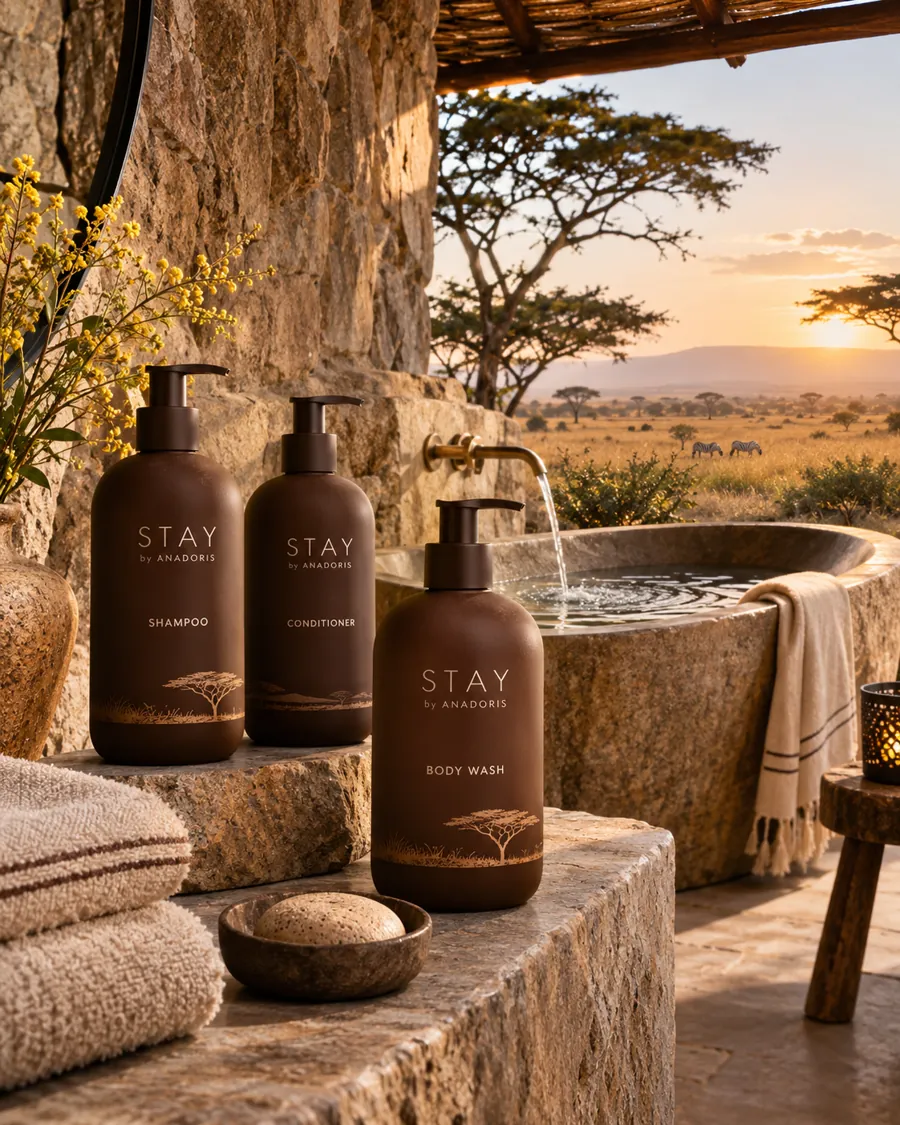
Use the same bottle family where possible, in a size that suits the new product. Match cap style and colour. Build artwork from the existing templates, changing only the product name and the required text.
If the new product needs a different format, such as a tube for a hand cream or a jar for a body butter, keep the visual system constant: the same logo placement, colour references and typography. Different shapes can still look like one family when the details match.
Which additions are most common?
This table lists common additions to own-brand amenity ranges and what to watch for with each.
| Addition | Why buyers add it | Watch for |
|---|---|---|
| Conditioner or lotion | Completes the core bathroom set | Fragrance balance in a thicker base |
| Hand wash for the basin | Visible at every hand wash | Foam or liquid format and dispenser fit |
| Bar soap | Guests expect it in many markets | Wrapping, fragrance strength and soap dish moisture |
| Retail sizes | Guests want to take the scent home | Retail labelling and display packaging |
| Refill packs for dispensers | Reduces packaging and restocking effort | Compatibility with dispensers |
| Room or linen spray | Extends the scent beyond the bathroom | Fragrance rights and different product rules |
How should approvals run for additions?
Run new products through the same steps as the originals: formula sample, packaging mock-up, artwork proof, pre-production sample. It is tempting to skip steps because "it is just another product in the range", but most problems with additions come from exactly that shortcut.
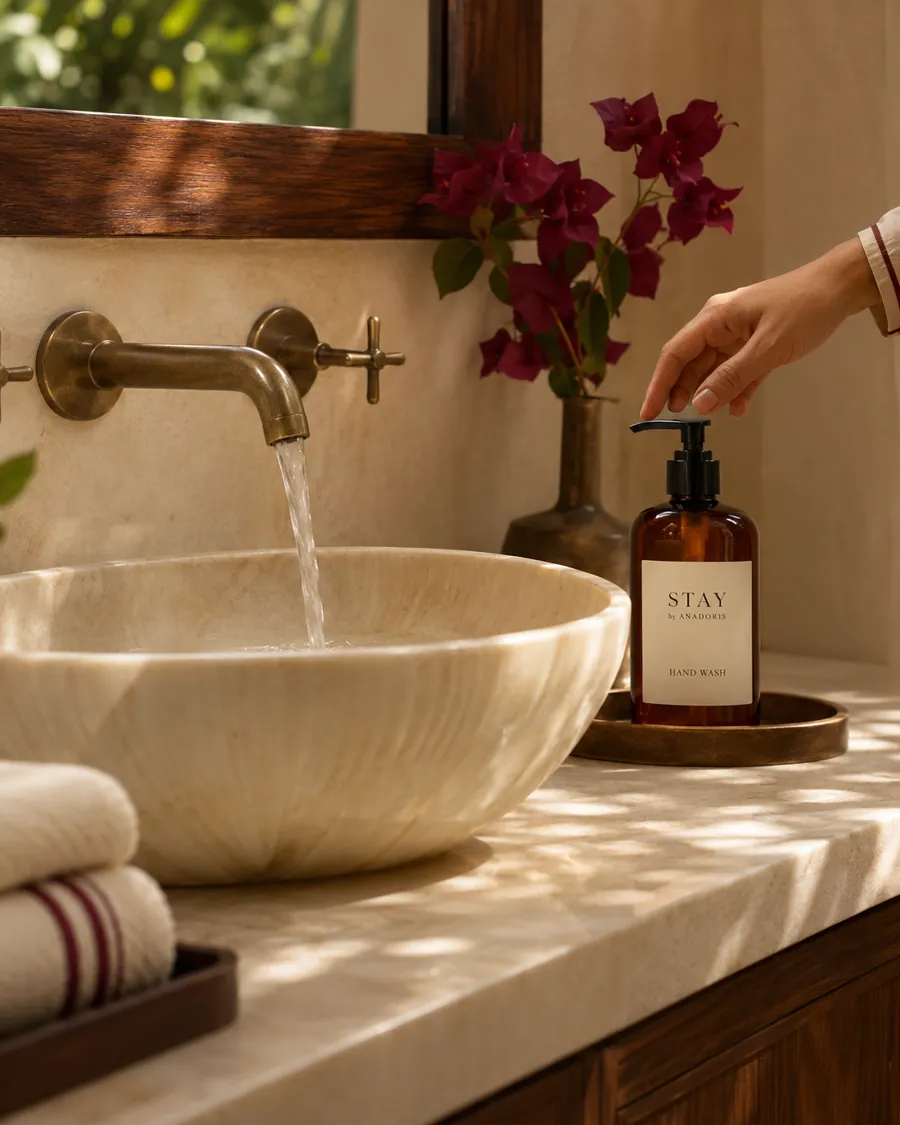
Approve the new product next to the existing ones, not on its own. Line them up on a basin or a shelf and check that colour, finish and proportions sit together. Add the new items to the artwork register and specification file as soon as they are approved.
When should additions be timed?
Time additions to coincide with a reorder of existing products where you can. Shared production planning, shared deliveries and a single round of internal training for housekeeping or spa staff all make the change smoother. Avoid launching new products during your busiest season, when nobody has time to review samples. For an overview of extending a range with STAY, see private label, or ask for samples of possible additions.
Brief staff before new products arrive. Housekeeping, spa or retail teams should know what the new item is, where it goes and how it differs from what they already handle, so the addition reaches guests as intended.
Questions on this topic
Will the same fragrance smell identical in a new product?
Not always. Each base changes how a fragrance smells, so the level may need adjusting to sit in balance with the rest of the range.
Can I add a product in a different bottle shape?
Yes. Keep logo placement, colours and typography consistent so different shapes still look like one family.
Do new products need the full sampling process?
Yes. Skipping steps for additions is a common cause of mismatched colours, fragrance or closures.
Keep reading
- Private label, white label or bespoke: what is the difference?
- How do you brief a private-label manufacturer?
- How to choose a fragrance for an own-brand amenity range
- Choosing bottle shape and material for a private-label range
- How to stock an Airbnb bathroom
- Hospital and clinic bathroom amenities: what to consider
- Gym locker room amenities: a practical checklist
Looking for supply? See Hotels & resorts, browse the product range or request samples.