

Guide
Single or dual sourcing for hotel amenities: which is safer?
Single sourcing means buying an item from one supplier; dual sourcing means splitting it between two. Single sourcing usually gives better consistency and closer relationships, while dual sourcing spreads supply risk, so the right choice depends on how critical the item is and how easily it could be replaced.
By Hemang Jain, Founder, Anadoris
What do single, sole and dual sourcing mean?
- Single sourcing: you choose to buy an item from one supplier, even though others could supply it.
- Sole sourcing: only one supplier can provide the item, for example because it owns a unique formula or component.
- Dual sourcing: you buy the same item from two approved suppliers, either splitting volume or keeping one as a backup.
- Multi-sourcing: the same idea with more than two suppliers.
The difference between single and sole sourcing matters. Single sourcing is a choice you can reverse. Sole sourcing is a dependency you need to manage, often through contract terms and stock levels.
Before choosing, list every amenity item and note which category it falls into today. Many buyers discover that some items they think of as single sourced are in fact sole sourced, because a unique bottle mould or fragrance belongs to the current supplier. That is worth knowing before you plan any change.
How do single and dual sourcing compare?
This table sets out the main trade-offs for amenity buyers.
| Factor | Single source | Dual source |
|---|---|---|
| Product consistency | High; one formula, one process | Harder; two products must match |
| Volume leverage | All volume with one supplier | Volume split; each supplier sees less |
| Supply risk | Concentrated in one site | Spread across two sites |
| Management effort | One relationship, one set of documents | Two audits, two specifications, two sets of records |
| Minimum order impact | Easier to reach minimums | Each supplier's minimums apply separately |
| Negotiating position | Relies on relationship and benchmarks | Ongoing comparison between suppliers |
Why is dual sourcing harder for branded amenities?
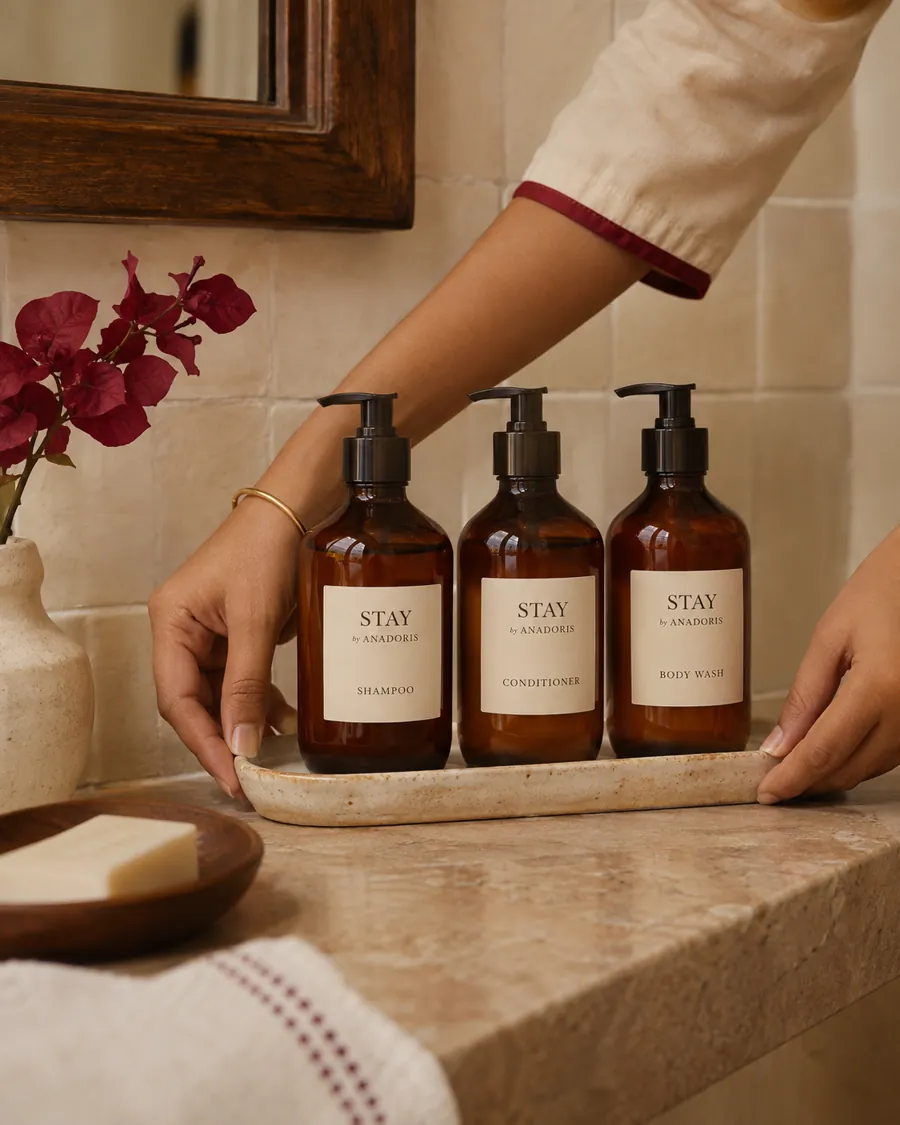
For a branded or signature range, guests expect the same fragrance, colour and feel in every room. Two manufacturers working from the same brief rarely produce identical products, because raw materials, fragrance compounding and processes differ. A guest moving between two of your properties may notice the difference.
Dual sourcing a branded range therefore needs extra controls: a shared fragrance from one fragrance house, a tight specification, a common reference sample and side-by-side checks of both suppliers' output. Minimums also apply to each supplier, which can double the stock you must carry. For many groups, the effort outweighs the benefit for signature items, so they single source the branded range and protect it in other ways.
There is also a quieter cost. When two suppliers share one branded item, each sees only part of your volume and may give your orders lower priority than a customer who brings all its business. Relationship strength is a real part of supply security, and splitting volume can weaken it.
When does dual sourcing make sense?
Dual sourcing is easier and more valuable for items where guests do not notice small differences and where a supply gap would be painful:
- Unbranded dry amenities such as cotton buds, shower caps and dental kits.
- Commodity items such as standard soap bars for back-of-house.
- Items with long or uncertain transport routes, where one delayed shipment could empty stores.
- Large groups across several countries, where a regional backup supplier reduces transit risk.
Some buyers keep a second supplier approved but inactive, with samples and documents on file, so it can be switched on quickly without running two live relationships.
A partial approach also works. Some groups single source the liquid toiletries that carry the brand, and dual source the surrounding dry amenities. Guests see a consistent signature range, while the items most exposed to commodity supply swings have a fallback.
How else can you reduce risk with a single supplier?
- Safety stock: hold enough to cover a realistic supply interruption.
- Rolling forecasts: share demand so the supplier can buy materials and plan production ahead.
- Ownership of assets: make sure you own your artwork files, and agree in writing who owns any unique tooling or fragrance.
- Contingency clauses: agree what happens if the supplier cannot deliver, including access to formula information through an agreed process where appropriate.
- Regular reviews: scorecards and audits catch problems before they become failures.
These steps give much of the protection of dual sourcing without splitting your volume or compromising consistency.
Ask your supplier directly how it manages its own supply risks: whether key raw materials and packaging components have approved alternative sources, how much it holds in stock, and how it would continue production if a machine failed. A supplier with its own resilience plan reduces the risk you carry by relying on it.
How do you decide for each product line?
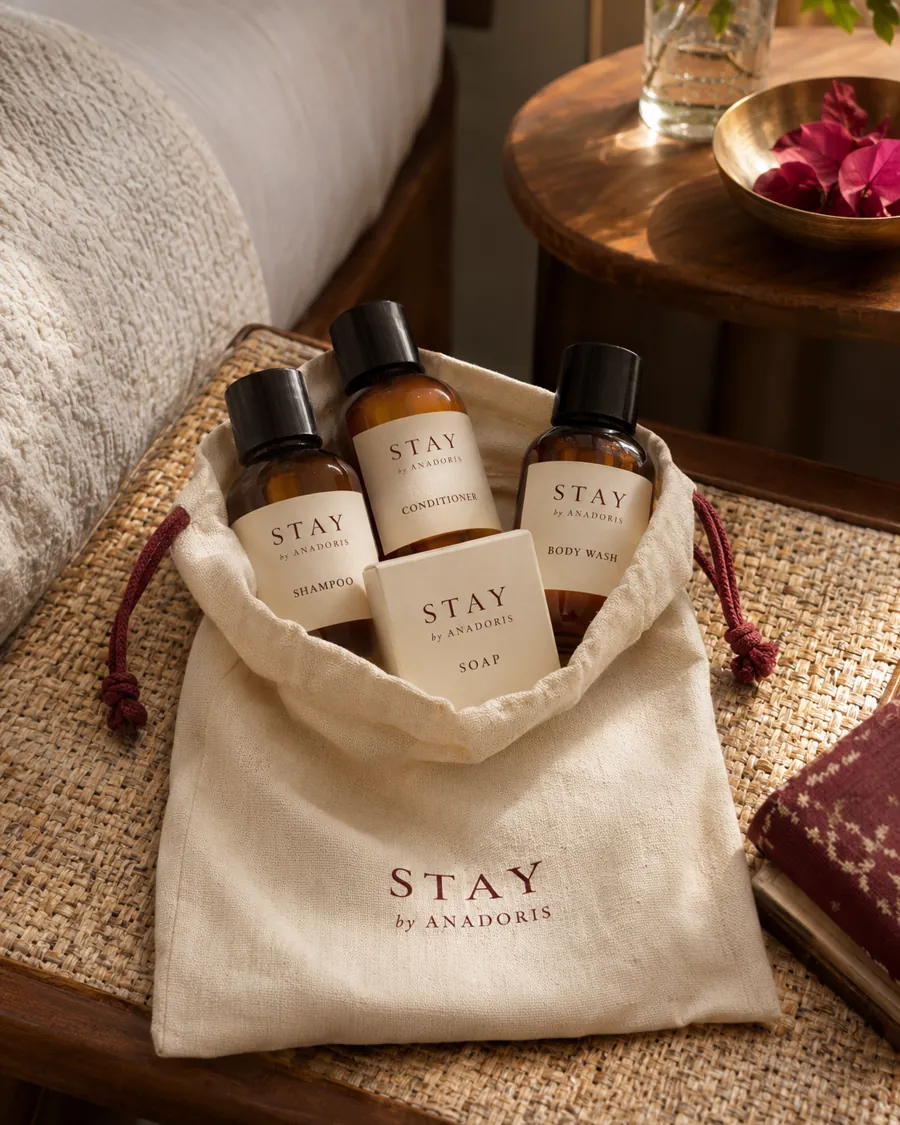
Sort your amenity list into groups by two questions: how visible is the item to guests, and how hard would it be to replace quickly? Visible, hard-to-replace items, such as a signature toiletry range, usually suit single sourcing with strong contingency. Low-visibility, easy-to-replace items suit dual sourcing or simple spot buying. Items in between call for judgement.
Review the decision when circumstances change: a new market, a new property type or a supply problem. Your sourcing strategy should follow the risk, not habit.
STAY by Anadoris manufactures liquid toiletries, soaps and dry amenities in one facility, so buyers can consolidate where it suits them; see products and the procurement page.
Questions on this topic
Is single sourcing risky?
It concentrates risk in one supplier. The risk can be managed with safety stock, forecasts, contract terms and regular reviews.
Can two suppliers make the same signature amenity?
They can try, but matching fragrance, colour and feel is difficult. It needs a shared fragrance source, tight specifications and side-by-side checks.
What is a backup supplier?
An approved supplier with samples and documents on file that is not currently supplying, so it can be activated quickly if needed.
Keep reading
- Manufacturer, trader or distributor: who should supply your amenities?
- Sourcing hotel amenities from India for properties abroad
- RFI, RFQ or RFP: which request should an amenity buyer send?
- How to compare amenity samples from rival suppliers fairly
- How to stock an Airbnb bathroom
- Hospital and clinic bathroom amenities: what to consider
- Gym locker room amenities: a practical checklist
Looking for supply? See Hotels & resorts, browse the product range or request samples.