

Guide
Price or value? Comparing amenity samples properly
Value is what a product delivers for its full cost, while price is only the figure on the quotation. When comparing amenity samples, judge cost per use, performance, how guests perceive it, consistency between batches and the reliability of supply, then weigh those against price.
By Hemang Jain, Founder, Anadoris
Why the cheapest sample is often not the cheapest choice
A lower unit price can hide a smaller fill, a thinner formula that guests use more of, a pump that dispenses too much, packaging that damages in transit, or a supplier who delivers late. Each turns into extra cost or guest complaints after the order is placed. Comparing on value means looking at what each product costs per use and what it does for the stay.
A useful definition: value is the benefit a product gives across its whole life with you, divided by everything it costs you over that life. The benefit includes guest satisfaction and fewer complaints; the cost includes price, waste, handling and the risk of supply problems.
For a structured scoring sheet, see a scorecard for evaluating amenity samples. This guide focuses on balancing that score against cost.
Cost per use, not cost per unit
Convert each sample to cost per use. For a bottle, that means:
Cost per use = landed unit cost ÷ number of uses per bottle
Uses per bottle depend on fill size and how much product a guest takes each time, which depends on viscosity, lather and the closure. A concentrated shampoo that lathers well may give more uses than a cheaper, thinner one in the same bottle. Test this with a few people using each sample in a normal way and noting how much is left.
Do the same for dispensers, using cost per millilitre and the quantity each press delivers. A pump that dispenses more than a guest needs raises cost per use even when the refill price is low, and adjusting the pump or the product's thickness can make more difference than changing supplier.
What else to compare
| Factor | How to test it | Why it matters for cost |
|---|---|---|
| Performance | Lather, rinse, feel on hair and skin | Poor performance leads to more product used or complaints |
| Fragrance | Smell from bottle, in use and after | Off-note or weak scent affects perception of the whole room |
| Packaging | Drop, squeeze, open and close, check the print | Damage and leaks become waste |
| Fill accuracy | Weigh several units | Under-fill means fewer uses |
| Batch consistency | Ask for samples from more than one batch, or for batch records | Inconsistency causes complaints after rollout |
| Supplier reliability | References from similar buyers, delivery history | Late delivery forces costly emergency buying |
How to weigh value against price
- Score each sample on the factors above.
- Calculate cost per use for each.
- Remove any sample that fails a must-have, such as fragrance or packaging integrity.
- Among the rest, compare score against cost per use.
- Choose the option with the best score for an acceptable cost per use, not simply the lowest price.
Write down the reasoning. When the finance team asks why the cheapest sample was not chosen, a clear comparison of cost per use and risk answers the question.
Testing with real guests
Bench testing by staff is useful, but guests use products differently. If possible, place shortlisted samples in a few rooms and watch requests, comments and how much is left after each stay. Keep the trial short and controlled. See how to run an amenity sampling session for a team-based approach.
Questions to ask the supplier
- What is the declared fill, and what tolerance applies?
- Which certifications cover the plant and products? Ours operates under GMP for cosmetics, ISO 9001, ISO 22716 and ISO 14001.
- Can you supply samples from production rather than from the lab?
- What happens if a delivered batch differs from the approved sample?
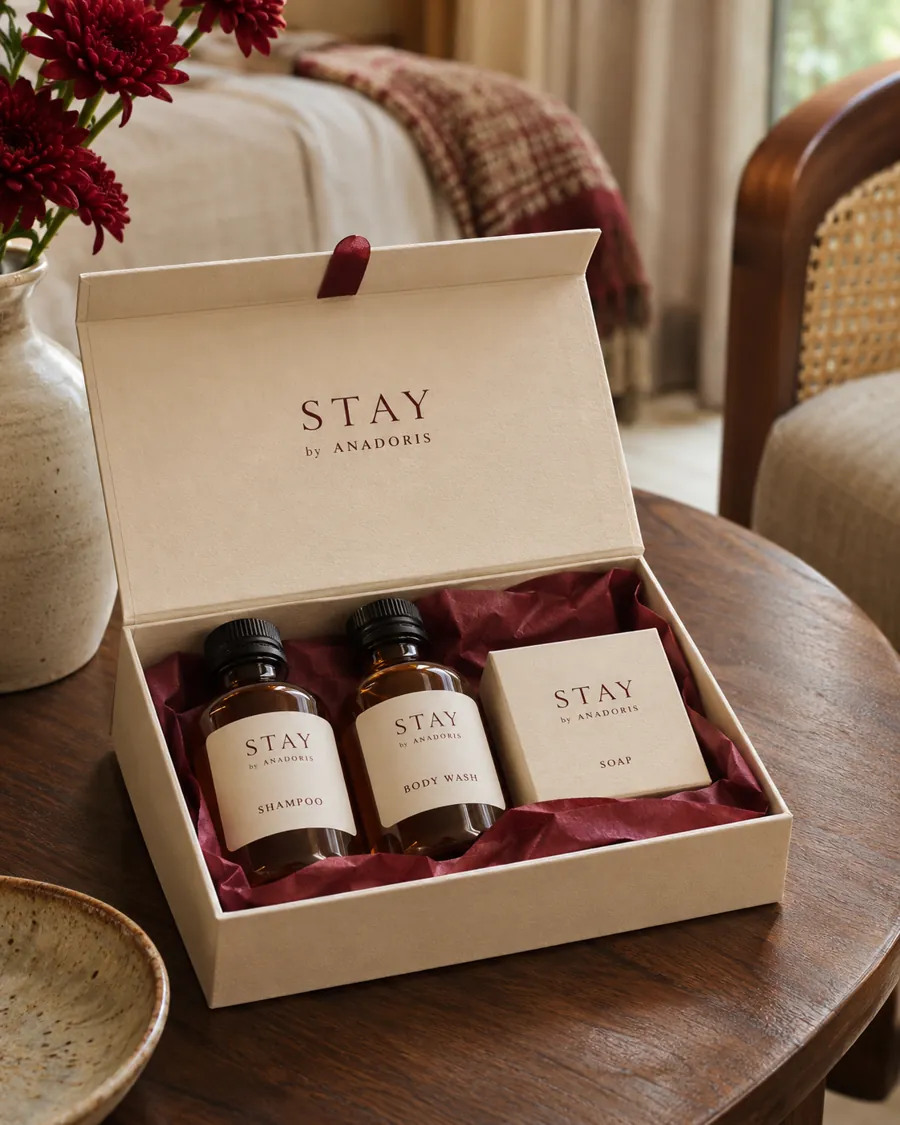
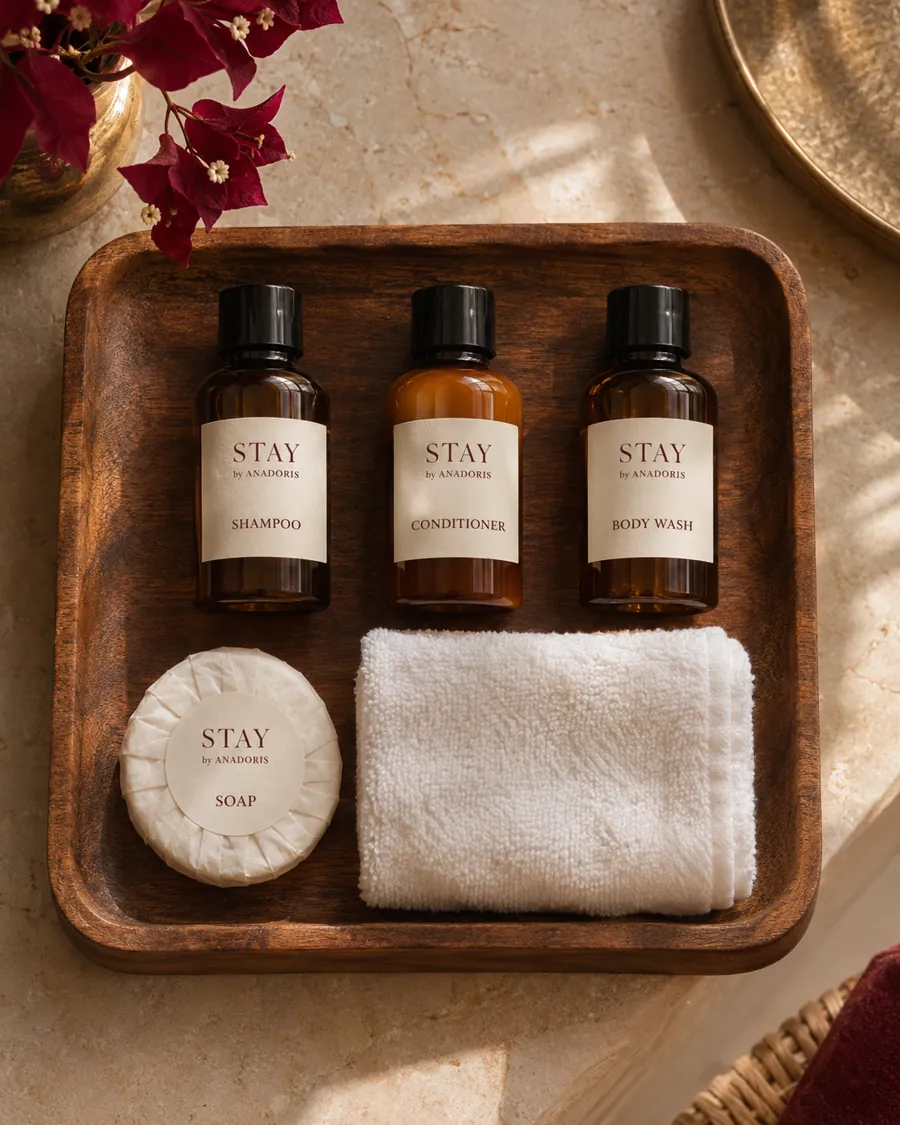
To compare STAY products against your current range, request samples.
Questions on this topic
How do I measure uses per bottle?
Have several people use each sample normally and record how many uses a bottle gives, or weigh the bottle before and after each use.
Should I trust lab samples?
Use them for early screening, then ask for production samples before approving, since lab and production batches can differ.
What counts as a must-have?
Anything you cannot accept regardless of price, such as fragrance quality, packaging integrity or required labelling.
Keep reading
- How to build an annual hotel amenity budget
- Setting an amenity cost target and tracking variance
- What drives the unit cost of an amenity bottle?
- Total cost of ownership for amenities: a working method
- How to stock an Airbnb bathroom
- Hospital and clinic bathroom amenities: what to consider
- Gym locker room amenities: a practical checklist
Looking for supply? See Hotels & resorts, browse the product range or request samples.