

Guide
Which languages must an amenity label carry?
The languages an amenity label must carry depend on the country where the product is supplied: EU member states set their own language rules, Great Britain requires English, GCC countries commonly require Arabic, and Indian declarations are generally in English or Hindi. INCI ingredient names are not translated, which keeps the ingredient list consistent across markets.
By Hemang Jain, Founder, Anadoris
Why do language rules matter for hotel amenities?
Hotel groups often buy one range for several countries, and international guests read labels in many languages. Regulators, however, care about the official requirements of the country where the product is made available. A label that is perfect in English may still be non-compliant in a market that requires its own language for warnings and directions.
Language also affects safety in a practical sense. A warning that a guest cannot read does not protect them, which is why regulators focus on precautions and directions when they set language rules.
What are the general language rules by market?
This table gives a general overview. Requirements change and have exceptions, so confirm with the Responsible Person, importer or adviser for each market.
| Market | General position |
|---|---|
| EU | Each member state sets the language for certain label information, usually its official language or languages |
| Great Britain | English |
| Northern Ireland | Follows EU cosmetics rules; English labelling |
| US | English, with limited exceptions |
| Canada | English and French for most label information |
| GCC countries | Arabic commonly required, often with English |
| India | Declarations generally in English or Hindi; check the Cosmetics Rules and Legal Metrology rules |
Which parts of the label need translating?
- Function of the product, where it must be stated.
- Precautions, warnings and directions for use.
- Other information that national rules require in the local language.
The ingredient list uses INCI names, which are the same in every language, so it is not translated. The PAO and hourglass symbols are also language-independent, which is one reason they exist.
How do you fit several languages on a small pack?
- Use symbols where they are permitted, such as the PAO symbol.
- Keep the front panel to the product name and function, with the other languages on the back.
- Use an outer carton or leaflet for longer text where rules allow it.
- Group languages by region, for example one pack design for northern Europe and another for the Gulf.
- Check legibility on a physical proof.
A single label carrying every language a group might need usually ends up illegible. Two or three regional versions often work better.
Keep a master text document for each product with every approved translation. When the formula or a warning changes, the master is updated once and each regional artwork follows from it, which avoids versions drifting apart.
What about guest-facing translation?
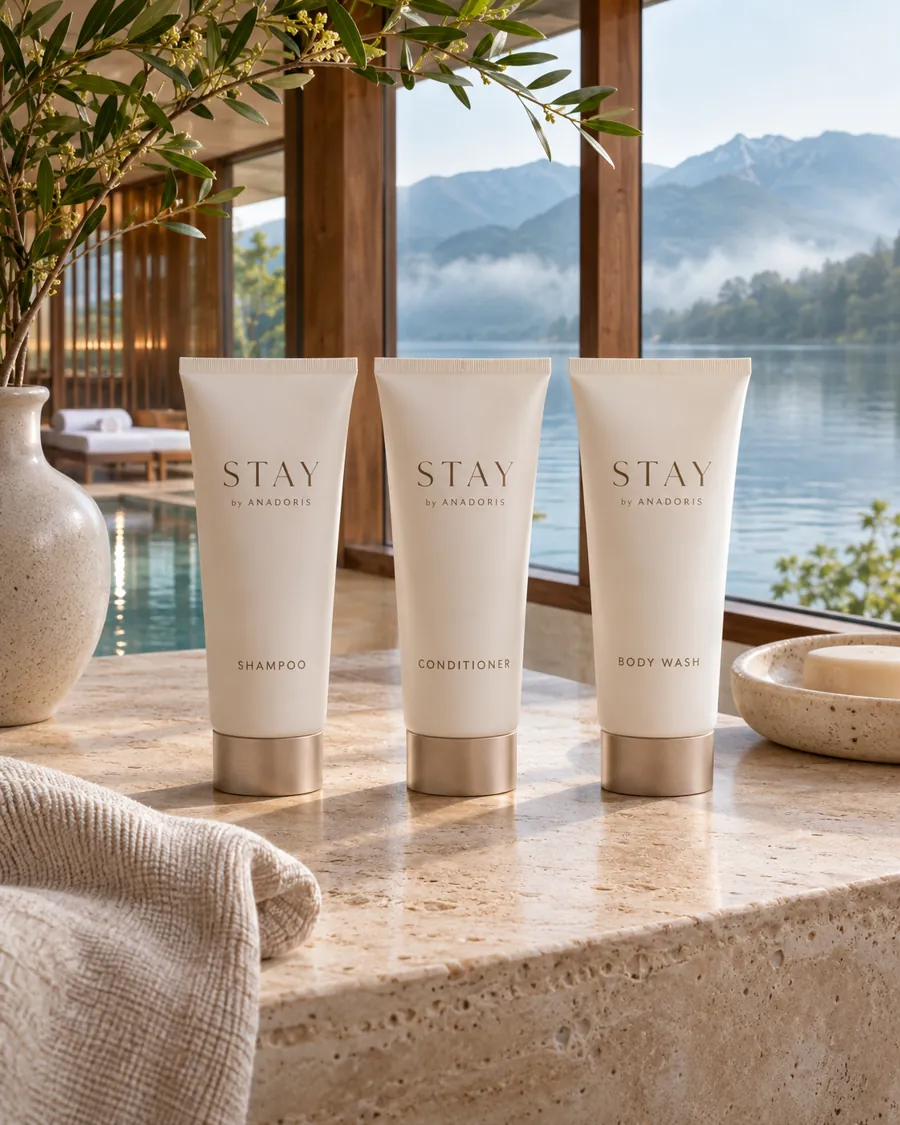
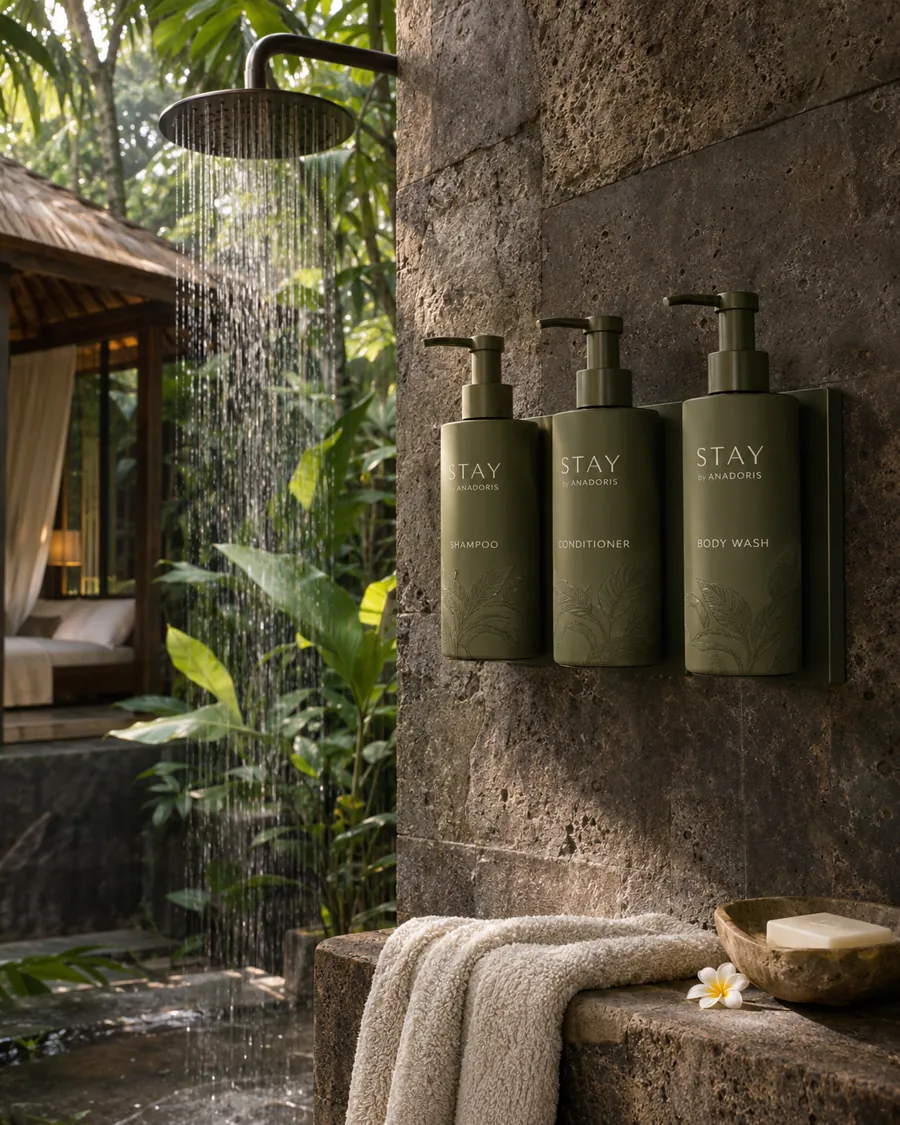
Beyond legal requirements, hotels sometimes add a short function word in several languages, such as shampoo, conditioner and body wash, so international guests can tell bottles apart. That is helpful, but keep it simple; colour coding and clear typography often do more than extra text. See briefing a designer on amenity packaging.
How should a buyer plan multilingual labels?
- List every country each product will reach before artwork starts.
- Ask the Responsible Person or importer for each market's language requirements.
- Decide how many regional versions you need, considering minimum order quantities per version.
- Have translations checked by a qualified translator and the local regulatory contact.
- File approved artwork for each language version in the product compliance file.
Each language version is usually a separate printed item. STAY's minimum orders for branded ranges start from around 5,000 units per product, confirmed with the quotation, so it is worth planning versions carefully; see private label.
Questions on this topic
Do INCI names need translating?
No. INCI names are designed to be the same across languages.
Can one label cover all EU countries?
Only if it carries every language required in each country concerned, which is often impractical on small packs.
Is English acceptable in the GCC?
English is common alongside Arabic, but Arabic is generally required for key information. Confirm per country.
Can stickers be used for translations?
Sometimes, depending on the market and the information. Check with the importer or regulator first.
Keep reading
- What documents should you ask an amenity supplier for?
- What is an INCI list and how do you read one?
- Fragrance allergens: what must appear on an amenity label?
- What does a certificate of analysis show for an amenity batch?
- How to stock an Airbnb bathroom
- Hospital and clinic bathroom amenities: what to consider
- Gym locker room amenities: a practical checklist
Looking for supply? See Hotels & resorts, browse the product range or request samples.