

Guide
Fragrance-free and sensitive-skin amenities: what can be claimed?
A fragrance-free amenity contains no added fragrance ingredients, whereas an unscented product may still contain a masking ingredient to cover the smell of the base. Claims such as hypoallergenic or suitable for sensitive skin need specific evidence, and none of them can promise that no guest will ever react.
By Hemang Jain, Founder, Anadoris
What is the difference between fragrance-free and unscented?
Fragrance-free generally means no fragrance or perfume ingredients have been added. Unscented describes how a product smells, not what is in it: a product can be unscented because a small amount of masking fragrance neutralises the base odour. Guests who avoid fragrance for medical reasons usually need fragrance-free, so be precise about which term applies.
Terms such as 'free from perfume' or 'no added fragrance' carry the same expectation and need the same evidence.
A fragrance-free product can still contain botanical extracts or essential-oil components that have their own odour or allergen content. Check the full INCI list, not only the front of the pack.
What do common sensitivity claims require?
This table summarises common claims, what they imply and the type of evidence a buyer should expect. Exact requirements vary by market.
| Claim | What it implies | Typical evidence |
|---|---|---|
| Fragrance-free | No added fragrance ingredients | INCI list with no parfum or fragrance and no fragrance-only ingredients |
| Unscented | No noticeable scent | Formula review; may include masking agents |
| Hypoallergenic | Formulated to minimise the risk of allergy | Formulation choices plus supporting safety data; no general legal definition in some markets |
| Suitable for sensitive skin | Tolerated by people with sensitive skin | Testing on relevant panels, assessed by the safety assessor |
| Dermatologically tested | Tested on skin under a dermatologist's supervision | Test report describing the study |
| Soap-free | Contains no soap (saponified fats) | INCI list showing synthetic cleansing agents instead |
Can a product be called allergy-free?
No product can guarantee that nobody will react, because people can react to almost any substance. Absolute claims such as 'allergy-free' or 'will not irritate' are hard to substantiate and are best avoided. Under EU rules, claims must meet common criteria including truthfulness and evidential support, and the US FDA has noted that 'hypoallergenic' has no federal definition. Softer, accurate wording is safer.
How should a hotel handle a fragrance-free request?
- Keep a fragrance-free option available, even in small quantities.
- Tell reservations and front-desk staff what it is called and where it is kept.
- Offer the INCI list when a guest asks about a specific ingredient.
- Avoid promising that any product is safe for a particular guest; suggest they check the list.
Our guide to fragrance, allergies and sensitive guests covers the guest-experience side.
What should you ask a supplier before using these claims?
- The full INCI list and confirmation of whether any fragrance or masking agent is present.
- The test report behind any 'dermatologically tested' or sensitive-skin claim, including what was tested and how.
- Confirmation from the Responsible Person or safety assessor that the claim is supported for your market.
- Notice before any formula change that could affect the claim.
If evidence is missing, drop the claim rather than soften it into something vague.
Keep the evidence in the product file with the INCI list and specification. When a guest, a corporate client or a brand auditor asks why a product is described as suitable for sensitive skin, the answer should take minutes to find.
Where does a fragrance-free product fit in a range?
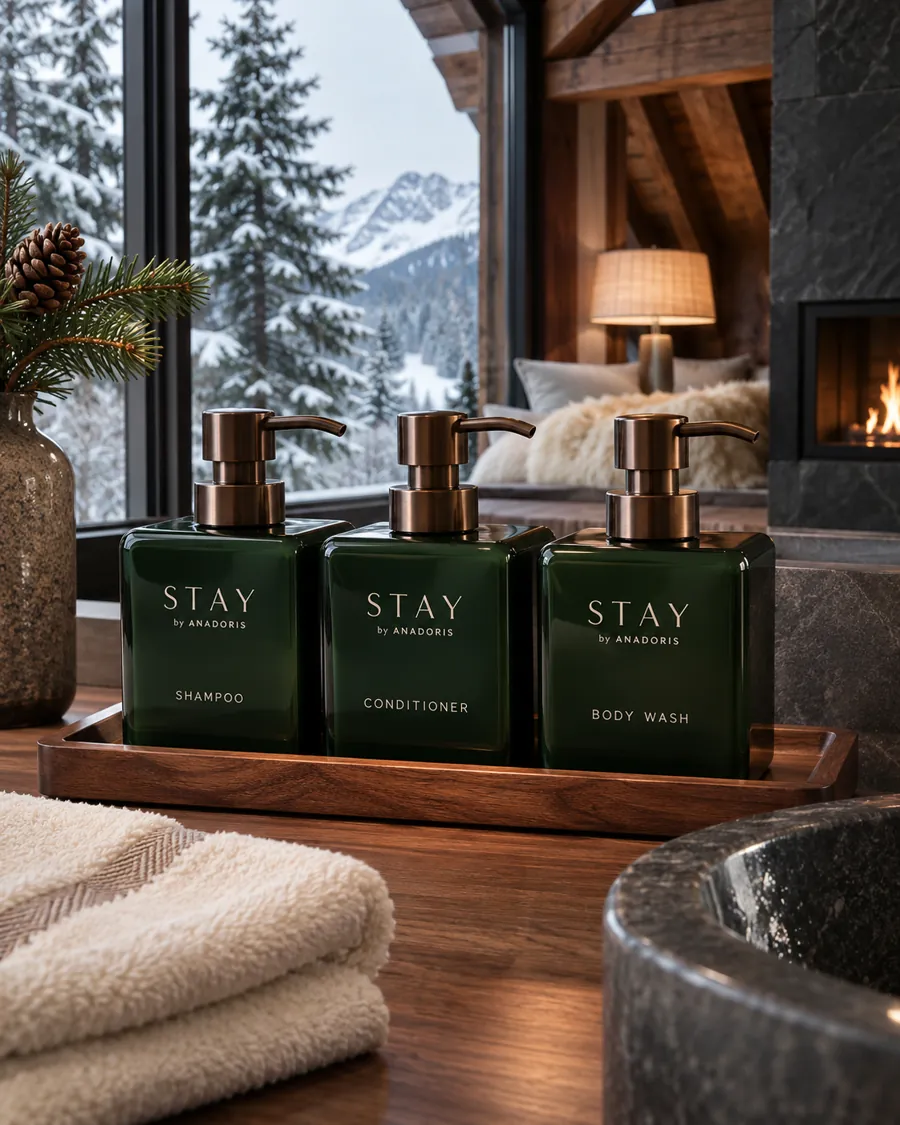
Many hotels keep one scented standard range and one fragrance-free product, often a body wash or lotion, available on request. This avoids carrying a full parallel range. STAY provides INCI and fragrance-allergen information on request for its product range, so properties can answer guest questions accurately; ask about fragrance-free options when you request samples.
Questions on this topic
Is hypoallergenic legally defined?
Not in every market. The US FDA has said there is no federal definition, and EU claims must meet general substantiation criteria.
Can fragrance-free products contain essential oils?
Products containing essential oils for scent are not truly fragrance-free. Check the INCI list for botanical oils and extracts.
Should fragrance-free amenities be in every room?
Not necessarily. Many hotels keep them available on request alongside a scented standard range.
Who decides whether a claim is supported?
The person responsible for the product in the market, usually with the safety assessor, based on the evidence held.
Keep reading
- What documents should you ask an amenity supplier for?
- What is an INCI list and how do you read one?
- Fragrance allergens: what must appear on an amenity label?
- What does a certificate of analysis show for an amenity batch?
- How to stock an Airbnb bathroom
- Hospital and clinic bathroom amenities: what to consider
- Gym locker room amenities: a practical checklist
Looking for supply? See Hotels & resorts, browse the product range or request samples.