

Guide
Cabin and spa amenities for cruise and river ships
A ship is a hotel that moves, has limited storage and can only restock at certain ports. This guide covers the amenity decisions that are different at sea and on rivers.
By Hemang Jain, Founder, Anadoris
What cruise and river ship cabins need
Cruise and river ship cabins need the same core amenities as a hotel room: shampoo, conditioner, body wash, hand wash, lotion and a few dry items. The difference is the setting. Products must stay put in motion, cope with damp salt air, fit tight storage and last between port calls.
Those constraints shape almost every choice, from the format of the bottles to the way spare stock is packed below deck. A product that works well in a city hotel can leak, slide or run short on a ship if nobody plans for the voyage.
River ships add their own twist. Cabins are often smaller, storage is tighter and resupply can be more frequent but less predictable, depending on locks, moorings and road access at each stop.
Storage and motion at sea
Anything loose in a cabin bathroom will move in a swell. Bottles stand on narrow ledges and slide off them, and dispensers that are not fixed firmly can work loose over time.
- Use wall-fixed dispensers or bottles held in brackets or recessed shelves.
- Choose closures that stay sealed if a bottle falls over, and test them by turning bottles upside down overnight.
- Pack spare stock in cartons that stack firmly and do not crush when the ship rolls.
- Label every carton clearly so crew can find stock quickly in a cramped store.
Space below deck is valuable. Larger refill containers usually take less room per wash than many small bottles, which is one reason ships move towards refill systems.
Plan where each corridor's spare stock lives too. A small locked cupboard on each deck, filled from the main store, saves stewards long walks to the lower decks during the morning service and keeps loose bottles out of passenger areas.
Humidity and salt air
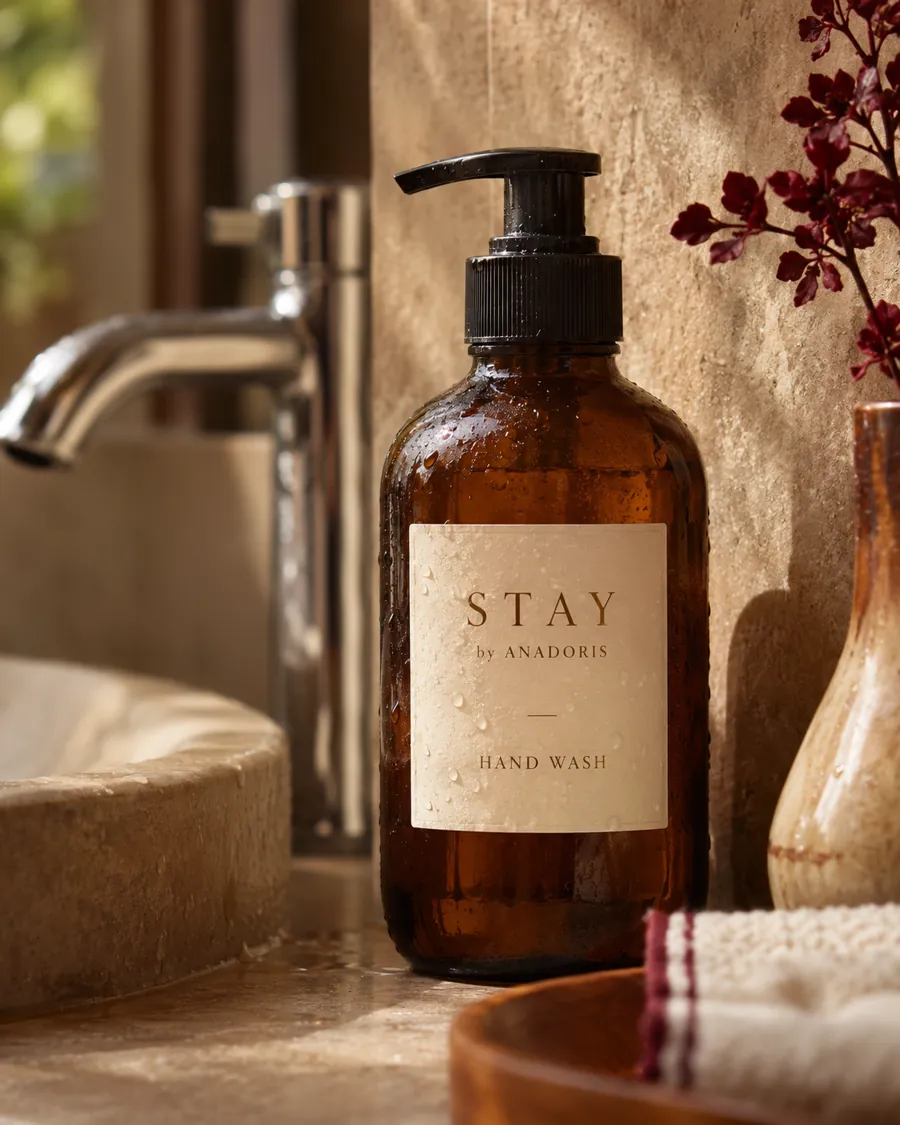
Cabins at sea are humid, and salt air reaches fittings, labels and packaging. Paper labels can peel and metal finishes can mark if they are not suited to the environment.
Ask your supplier about label materials that tolerate damp conditions and about dispenser finishes for marine use. Keep cartons off the deck of the store, away from condensation, and rotate stock so the oldest is used first. Fragrance behaves differently in warm, damp air too, so test candidates in a real cabin bathroom after a hot shower rather than on a paper strip. Our guide to fragrance for hot and humid climates covers this in more detail.
Dry amenities such as cotton pads, shower caps and dental kits should be sealed individually. Once damp gets into a box of loose items, the whole box is usually wasted.
Miniatures, dispensers or both
Most ships now run a mix of formats. The right blend depends on cabin grade, storage and how often the ship can restock.
| Format | Best for | At sea | Watch for |
|---|---|---|---|
| Wall dispensers | Standard cabins, crew areas | Fixed in place, low storage per wash | Firm mounting, refill routine |
| Miniatures, 30 or 50 ml | Suites, special requests | Easy to hand out | Storage space, waste on board |
| Refillable counter bottles | Design-led suites | Needs brackets or ledges | Topping up and cleaning |
| Bulk refills, 1 or 5 litre | Restocking dispensers | Compact per wash | Stacking, leaks, rotation |
Choose refill systems with tamper-resistant dispensers so cabin stewards, not passengers, control the contents.
Spa and wellness areas
A ship's spa needs products for treatment rooms, changing rooms and showers. Changing rooms take heavy use in a short window, often before dinner or after shore excursions, so dispensers and quick refills suit them. Treatment rooms may use larger professional formats chosen by the spa team.
Keep a link between the spa and the cabins. If the cabins carry one scent family, the spa can use the same family or a complementary one. Guests then recognise the ship's scent across the voyage. Retail items in the spa shop can repeat the cabin range so guests can take it home. Ask suppliers which wellness items, such as pillow mists or bath salts, can be matched to the cabin fragrance.
Spa changing rooms also need slippers, towels and a hair dryer station kept stocked through the busiest hours. Ask one attendant to check dispensers between sessions rather than at fixed times.

Waste handling on board
Everything used on a ship has to be stored, handled and landed somewhere, so packaging choices matter more than on land. Fewer small bottles generally means less waste to sort and store between ports.
Rules on waste at sea, plastics and discharges come from international agreements, flag states, port authorities and the operator's own policy, and they change. Confirm current requirements with your environmental officer and the ports on your itinerary before choosing packaging. Ask suppliers for clear material information on every bottle, cap and carton so your crew can sort waste correctly.
Planning resupply at ports
- Work out usage per cabin per night from past voyages, split by cabin grade.
- Map the itinerary and mark the ports where stores can be loaded reliably.
- Set stock on board to cover the longest stretch between those ports, with a safety margin.
- Agree with the supplier how shipments are packed, labelled and consolidated for each loading port.
- Check customs and port paperwork for each loading point with your ship's agent.
- Count stock at each turnaround and adjust the next order.
Most problems at sea come from a missed loading, not from heavy use. Build in slack for delays.
Choosing a supplier for ships
STAY by Anadoris makes personal care in-house in Ambala, India, under GMP (cosmetics), ISO 9001, ISO 22716 and ISO 14001 certification, and supplies worldwide. Miniatures come in 30 and 50 ml, dispenser bottles in 300 ml and refills in 1 and 5 litre packs. Quantities, lead times and documents are confirmed with each quote.
When you compare any suppliers, ask for samples shipped in the cartons they would use for a real order, then keep them on board for a voyage. Check for leaks, crushed corners and peeling labels at the end. Ask how shipments would be consolidated for different loading ports and what paperwork travels with each one.
Questions on this topic
Do cruise ships use refillable dispensers?
Many do, especially in standard cabins and crew areas, because fixed dispensers stay in place in motion and bulk refills take less storage per wash. Suites and special requests often keep miniatures. Tamper-resistant dispensers let cabin stewards control the contents and refill them during normal servicing.
How do ships store amenities between ports?
Spare stock is packed in firm, clearly labelled cartons that stack without crushing and stays off the store floor, away from condensation. Stock is rotated so the oldest is used first, and the amount carried is planned around the longest stretch between ports where stores can be loaded reliably.
What rules apply to amenity waste at sea?
Waste, plastics and discharge at sea are governed by international agreements, flag states, port authorities and each operator's policy. These rules change and differ by region. Confirm current requirements with your environmental officer and the ports on your itinerary, and ask suppliers for clear material information on all packaging.
Should a ship's spa use the same fragrance as the cabins?
It helps. Using the same scent family, or a complementary one, in cabins, spa and retail means guests recognise the ship's scent throughout the voyage. Changing rooms suit dispensers, while treatment rooms may use larger professional formats chosen by the spa team.
Keep reading
- What goes in an airline amenity kit, cabin by cabin
- Shower suite amenities for airport lounges
- How to stock an Airbnb bathroom
- Single-use bottles or wall dispensers? How to choose
- Hospital and clinic bathroom amenities: what to consider
Looking for supply? See Airlines & travel, browse the product range or request samples.