

Guide
Amenities for glamping sites, tented camps and eco-lodges
Camps and lodges ask a lot of their amenities: no mains drainage, heat, dust and animals that follow their noses. This guide covers what to provide and how to store and present it.
By Hemang Jain, Founder, Anadoris
What a glamping site or tented camp should provide
A glamping site or tented camp should provide the same essentials as a small hotel: shampoo, conditioner, body wash, hand wash, lotion, towels and slippers. What changes is the format. Choose refillable containers, products suited to your greywater system, sealed storage that keeps out dust and animals, and simple, tidy presentation.
Guests at camps expect to be closer to nature, but they still expect to feel clean and comfortable at the end of the day. A well-chosen set does both without looking out of place in canvas, timber or stone.
The best starting point is a walk around the site with the person who manages water and waste. Their constraints decide more than the brochure does.
No mains drainage: what goes down the drain
Many camps and lodges are not connected to mains sewers. Shower and basin water may run to a soakaway, a reed bed or a treatment unit, or be collected and reused for plants. Whatever the system, everything guests wash with ends up in it.
- Ask your supplier for full ingredient information for every rinse-off product, and share it with whoever designed or maintains your greywater system.
- Avoid adding extra products, such as bath oils or salts, that the system was not planned for.
- Keep the same products in use so you can see how the system responds over time.
Rules on greywater, discharge to land and protected areas vary by country and region. Confirm current requirements with your local authority or environmental regulator before you choose products or change the system. Avoid telling guests products are harmless to the environment unless you can support the claim.
Brief staff as well. Housekeepers should not pour leftover product, cleaning chemicals or bleach down drains that feed the greywater system, and should know where those go instead.
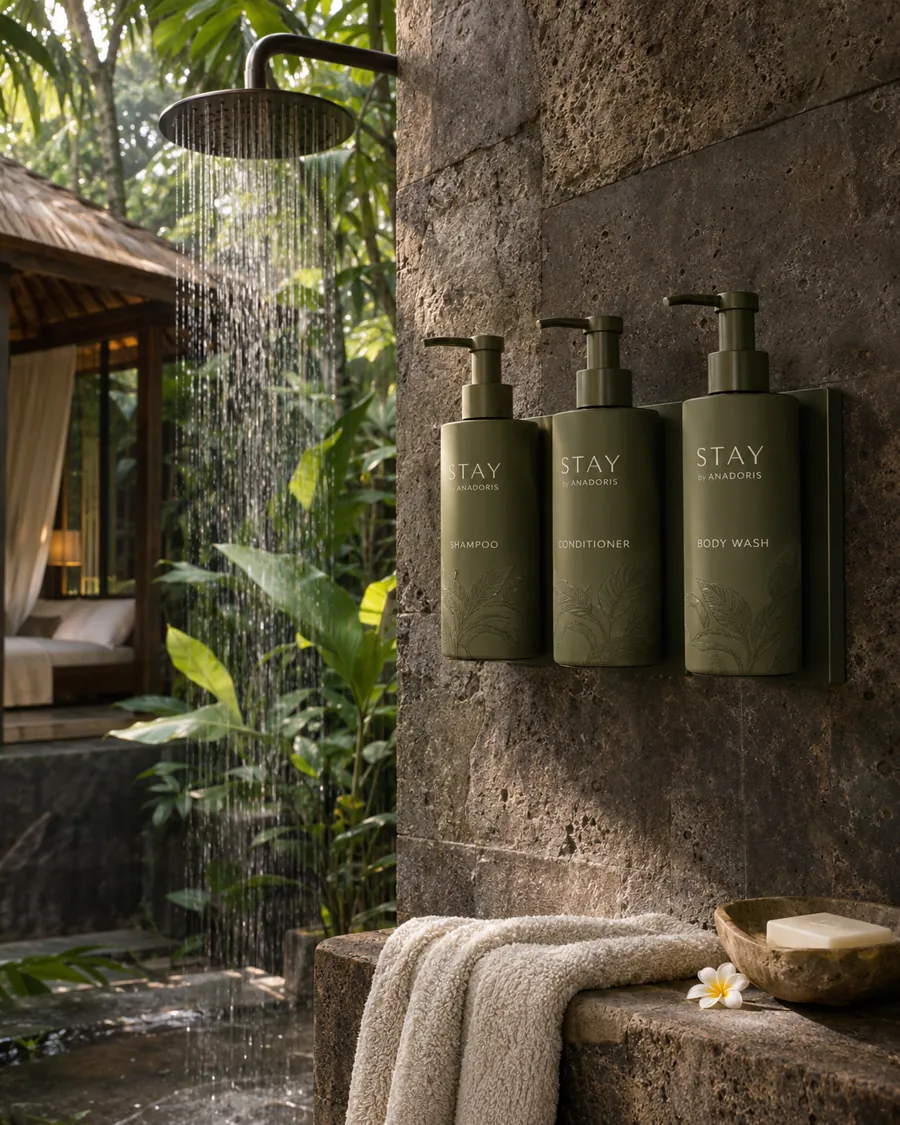
Refill formats that suit remote sites
Remote sites pay twice for every bottle: once to bring it in and again to take the empty out. Refill formats reduce both trips.
| Format | Suits | Strength | Watch for |
|---|---|---|---|
| Wall dispensers | Fixed bathrooms, shower blocks | Little waste, stays put | Needs a solid fixing |
| Refillable pump bottles | Tents, open-air showers | Moves with the guest | Cleaning and topping up |
| Bulk refills, 1 or 5 litre | Central store | Fewer deliveries | Heat and sealed storage |
| Miniatures, 30 or 50 ml | Walking safaris, fly camps | Light, easy to carry | Empties to pack out |
| Bar soap | Basins, hand washing | Little packaging | Dish drains, gets soft in heat |
Refill systems with tamper-resistant dispensers work well in shower blocks. In tents, sturdy pump bottles on a tray are often easier to keep looking tidy.
Heat and dust
Heat changes products. Lotions can thin, scents can shift and plastic bottles can soften if they sit in direct sun. Store bulk stock in the coolest, shadiest place on site, and keep bottles in tents out of direct sunlight.
Dust gets into everything. Choose pumps with caps or closing nozzles, wipe bottles at every service and keep dry amenities such as cotton pads, shower caps and dental kits individually sealed. Our guide to fragrance in hot climates explains why fresh, light scents usually hold up better than heavy ones in warm air.
Test samples on site for a few weeks before you order in volume. A product that behaves in an air-conditioned showroom may not behave in a tent at midday.
Water supply matters too. Where water is pumped, trucked or heated by the sun, guests may take shorter showers. Products that lather and rinse easily suit that better than heavy conditioners or rich body creams.
Wildlife-safe storage
Scented products attract animals. Insects, rodents, monkeys and larger wildlife may investigate tents and stores where they smell something sweet or fruity. That can damage stock, tents and guest belongings.
- Keep bulk stock in sealed, lockable containers or a closed store.
- Give guests a lidded box or locker for toiletries in each tent.
- Avoid strongly sweet or food-like fragrances.
- Tell guests not to leave products outside, and explain why at check-in.
Local guides, rangers and conservation staff know which animals visit your site. Ask them before you decide on storage.
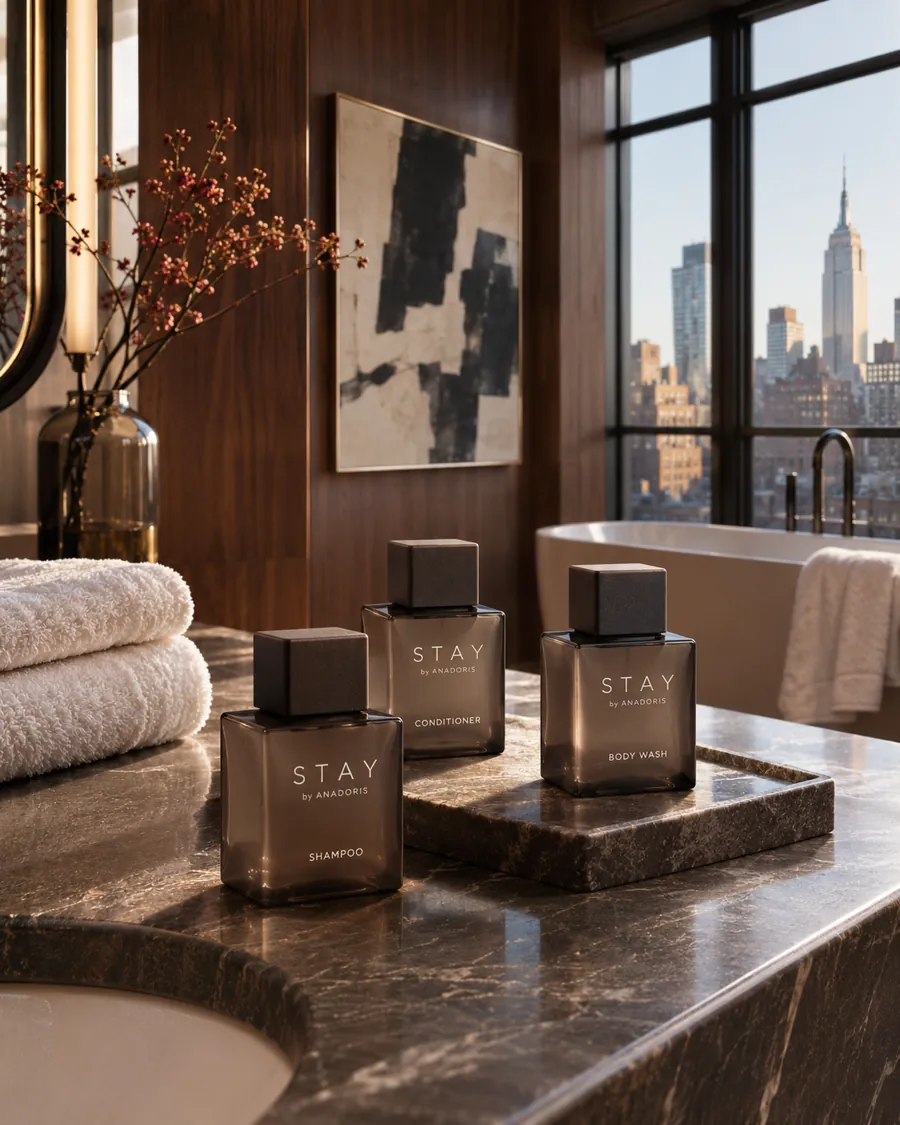
Presentation without a conventional bathroom
Many tents have an open-air shower, a wash stand or a bucket shower instead of a tiled bathroom. Amenities still need a home. A wooden or woven tray, a hook for the wash bag and a covered basket for towels make a simple set feel considered.
Match containers to the setting: plain labels, natural tones and refillable bottles that look at home on timber. Slippers with firm soles are useful where guests walk on decking or paths at night. A small card explaining what each product is, and how water is handled on site, answers questions before they are asked.
At night, light matters as much as product. A lantern or low light near the wash stand helps guests find what they need without a torch and stops them knocking bottles over in the dark.
Setting up a new camp
- Map every place guests wash and where that water goes.
- Share ingredient information with your water system designer and check local rules.
- Choose formats for shower blocks, tents and walking camps separately.
- Plan sealed, shaded storage for bulk stock and lockable boxes for tents.
- Trial samples on site in hot and dusty conditions.
- Write a short restocking and cleaning routine for staff.
Supply for remote properties
STAY by Anadoris makes personal care in-house in Ambala, India, in a GMP (cosmetics), ISO 9001, ISO 22716 and ISO 14001 certified facility, and supplies worldwide. Refills come in 1 and 5 litre packs, and dispenser bottles in 300 ml. Quantities, lead times and documents, including ingredient information, are confirmed with each quote. See short stays for related ranges.
Whoever you buy from, ask for samples you can leave on site through a hot spell and for ingredient information you can pass to your water system designer. Check that bulk packs seal well enough to survive a rough road journey and that cartons are labelled so staff can find stock in a dim store.
Questions on this topic
Which amenities suit a site with no mains drainage?
Rinse-off products whose full ingredient information you have shared with whoever designed or maintains your greywater system. Avoid adding extras the system was not planned for, keep products consistent, and confirm local rules on greywater and discharge to land with your local authority or environmental regulator.
Are dispensers practical in glamping tents?
Fixed wall dispensers suit shower blocks and solid bathrooms. In tents and open-air showers, sturdy refillable pump bottles on a tray are often easier, because they can be cleaned, topped up and moved. Bulk refills kept in a sealed, shaded store cut deliveries for both.
How do camps keep animals away from toiletries?
Keep bulk stock in sealed, lockable containers, give each tent a lidded box for toiletries, avoid strongly sweet or fruity scents and ask guests not to leave products outside. Local guides and rangers know which animals visit and can advise on storage.
How should amenities be presented in an open-air bathroom?
Give every item a home: a wooden or woven tray, a hook for the wash bag and a covered basket for towels. Plain labels and refillable bottles look natural on timber, and a short card explaining the products and how water is handled answers common questions.
Keep reading
- Amenities for conference, exhibition and wedding business
- How to stock an Airbnb bathroom
- Hospital and clinic bathroom amenities: what to consider
- Gym locker room amenities: a practical checklist
Looking for supply? See Hotels & resorts, browse the product range or request samples.