

Guide
How a small D2C brand can add a hotel and hospitality line
A small D2C brand can add a hospitality line by adapting its best-known products into hotel formats such as large refills, dispensers and miniatures, rather than selling its retail packs to hotels. Hotels buy differently from consumers, so the line needs different sizes, sturdier packaging and a reliable resupply promise.
By Hemang Jain, Founder, Anadoris
Why hotels are a different customer
A consumer buys one bottle for their own bathroom. A hotel buys for many guests, over and over, and judges a supplier on whether stock arrives when promised and every batch matches the last. Hotels also care about cost per stay, ease of refilling and how the product looks in a photograph of the room. A brand that is loved online still has to prove it can serve a business customer.
The upside is real. A hospitality line puts your product in the hands of guests who may never have found you online, in a setting where they have time to try it properly. Many guests look up the products they liked after a stay, so the right properties can work as a quiet showroom.
Retail range and hospitality line compared
This table summarises what usually changes when a retail product becomes a hospitality product.
| Aspect | Retail range | Hospitality line |
|---|---|---|
| Pack size | Home-use bottle | Miniatures, pump bottles, dispenser cartridges, bulk refills |
| Formula | Often feature-rich and fragrance-led | Gentle for many skin and hair types, quick to rinse |
| Packaging | Designed for a shelf and an unboxing | Robust, easy to grip wet, simple to refill |
| Label | Full consumer label | Brand-forward; hotel co-branding sometimes requested |
| Buying pattern | Single orders | Repeat orders on a schedule, often by the case |
| Support | Customer service | Account management, samples, staff guidance |
Which products to adapt first
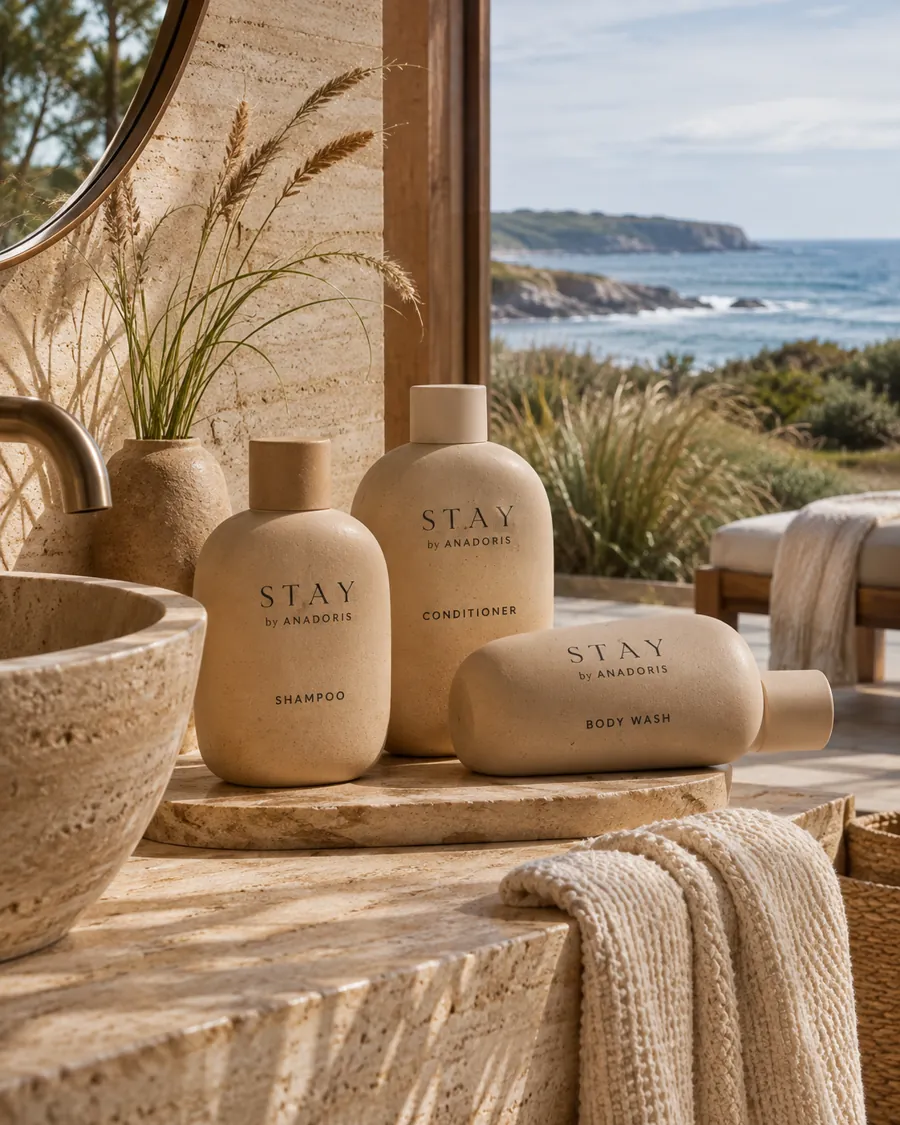
Start with the products a guest uses in every stay: shampoo, conditioner, body wash and hand wash. Lotion is a strong fifth. Keep your signature fragrance, because that is what makes the line yours, but check that the formula suits frequent use by many different people. Products that rely on unusual textures or strong actives may need a gentler hospitality version.
Formats hotels will ask for
- Miniatures for boutique rooms, suites and gift sets.
- Pump bottles for vanity tops in smaller properties.
- Wall dispensers and refill cartridges for showers and shared bathrooms.
- Bulk refills so housekeeping can top up without waste.
A manufacturer with fill sizes from 3 ml to 25 litres can usually cover all of these from the same formula.
How to find the first hospitality customers
- Start with boutique hotels, homestays and spas whose guests overlap with your customers.
- Offer a trial in a few rooms, with simple feedback questions.
- Provide a short sheet for staff: how to refill, how to store, what the fragrance is.
- Ask permission to mention the partnership on both sides.
A small number of well-matched properties is worth more than a long list of lukewarm ones.
Think about how hotels will reorder. Most small properties want a simple way to repeat the last order without a sales conversation each time. A clear product list with case quantities and a named contact makes you easy to buy from, which matters as much as the product itself.
How do you protect your brand in a hotel setting?
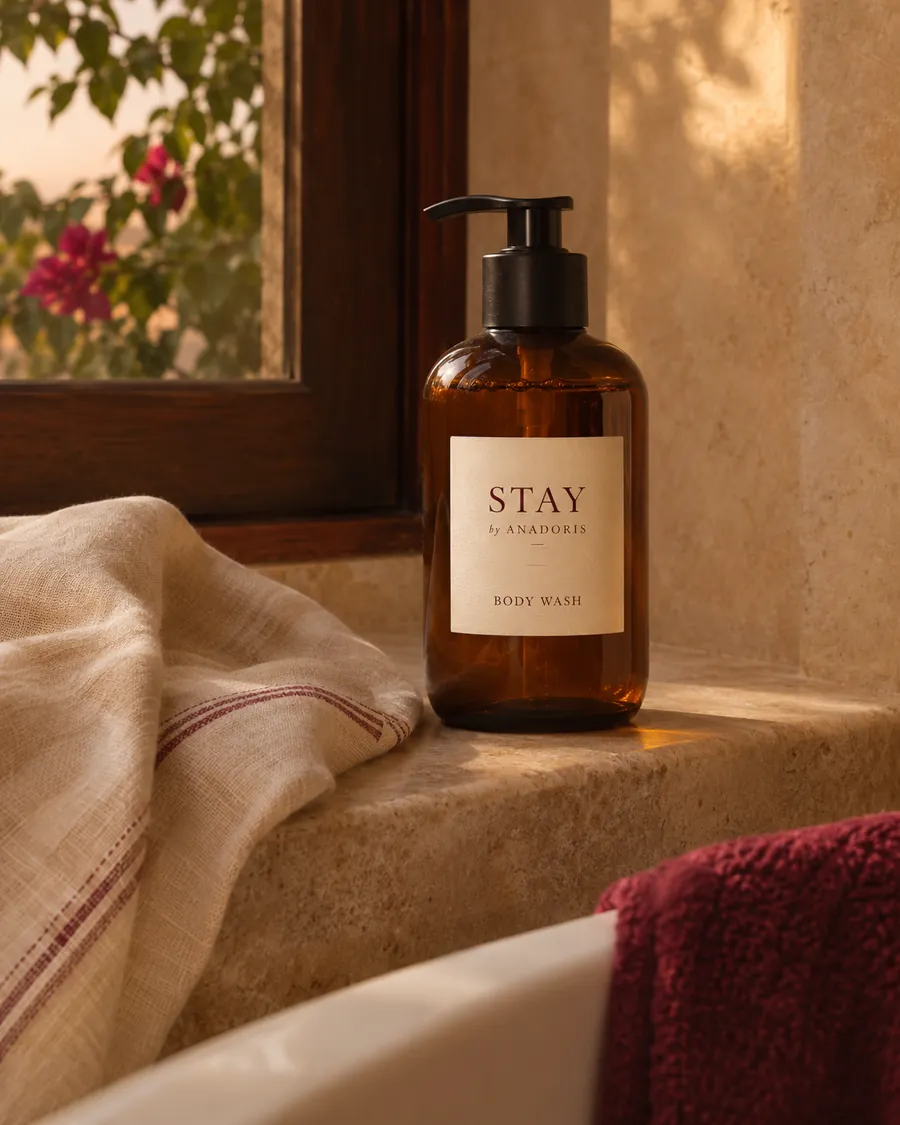
Your products will be used in bathrooms you do not control. Agree basic standards with each property: dispensers kept clean and labelled, refills sealed until use, and no decanting of other products into your bottles. A dirty or mislabelled dispenser with your name on it harms the brand more than no presence at all. A short staff card and an occasional check-in call usually keep standards up.
Production and supply questions to settle
Before promising hotels anything, make sure your manufacturer can produce the hospitality formats consistently and at a scale beyond your retail runs. Ask about batch sizes, how often they can produce, how stock is held and how batch consistency is checked. Certifications such as GMP for cosmetics, ISO 22716 and ISO 9001 tell hotel buyers that quality systems are in place. Our guide on working with a manufacturer as a first-time buyer sets out the conversation.
Write a one-page plan: which products, which formats, which kinds of property, and how you will resupply them. Then talk to a manufacturer who already makes hotel formats. STAY by Anadoris makes hospitality formats under private label for brands, from a 40,000 sq ft facility in Ambala; request samples to see the formats in your fragrance.
Questions on this topic
Can I sell my retail bottles to hotels?
Some small properties will buy them, but most hotels prefer hotel formats such as dispensers, refills and miniatures.
Does a hospitality line need a different formula?
Not always, but it should be gentle enough for many guests and practical in a shower. Your manufacturer can advise.
Should the hotel's name appear on my products?
Some hotels ask for co-branding. Decide your policy early, since it affects labels and minimums.
Keep reading
- What are the best bathroom amenities for a boutique hotel?
- What should a B&B provide in guest bathrooms?
- What do Airbnb guests expect to find in the bathroom?
- Dispensers or miniatures for a small property: how to choose
- How to stock an Airbnb bathroom
- Hospital and clinic bathroom amenities: what to consider
- Gym locker room amenities: a practical checklist
Looking for supply? See Hotels & resorts, browse the product range or request samples.