

Guide
How to cut amenity costs without cutting quality
The safest way to cut amenity cost is to remove waste and complexity before touching the product the guest uses. Replacement rules, fill sizes, packaging, the number of variants and how you order usually hold more savings than a cheaper formula.
By Hemang Jain, Founder, Anadoris
Where does amenity money actually go?
Amenity spend is the product of how many units are used and what each one costs to land. Most cost-cutting focuses on the second part, the unit price, and tries to get it down by choosing a cheaper product. The first part, how many units are used and discarded, is often where the larger saving sits, and cutting it does not change what the guest experiences in the shower.
Before acting, split last year's spend by item and look at usage per occupied room night for each. The largest lines, and the ones with the most part-used returns, are where to start.
Savings ranked by guest impact
This table orders common measures from least to most visible to guests. Start at the top and work down only as far as you need.
| Measure | What changes | Guest impact |
|---|---|---|
| Tighten the replacement rule | Replace when used instead of every service | None if done well |
| Collect and reuse part-used items where permitted | Fewer full units discarded | None |
| Reduce variants | One fragrance or one size across the range | Low |
| Simplify secondary packing | Bulk packing instead of individual cartons | Low |
| Simplify decoration | Fewer print colours, stock closure | Low to moderate |
| Move to a stock bottle | Avoid custom mould and its minimum | Low to moderate |
| Change fill size | Larger size for longer stays, smaller where usage is light | Moderate |
| Switch format | Miniatures to dispensers in some room types | Moderate to high |
| Change formula | Cheaper base or lower fragrance dosage | High |
How to tighten the replacement rule
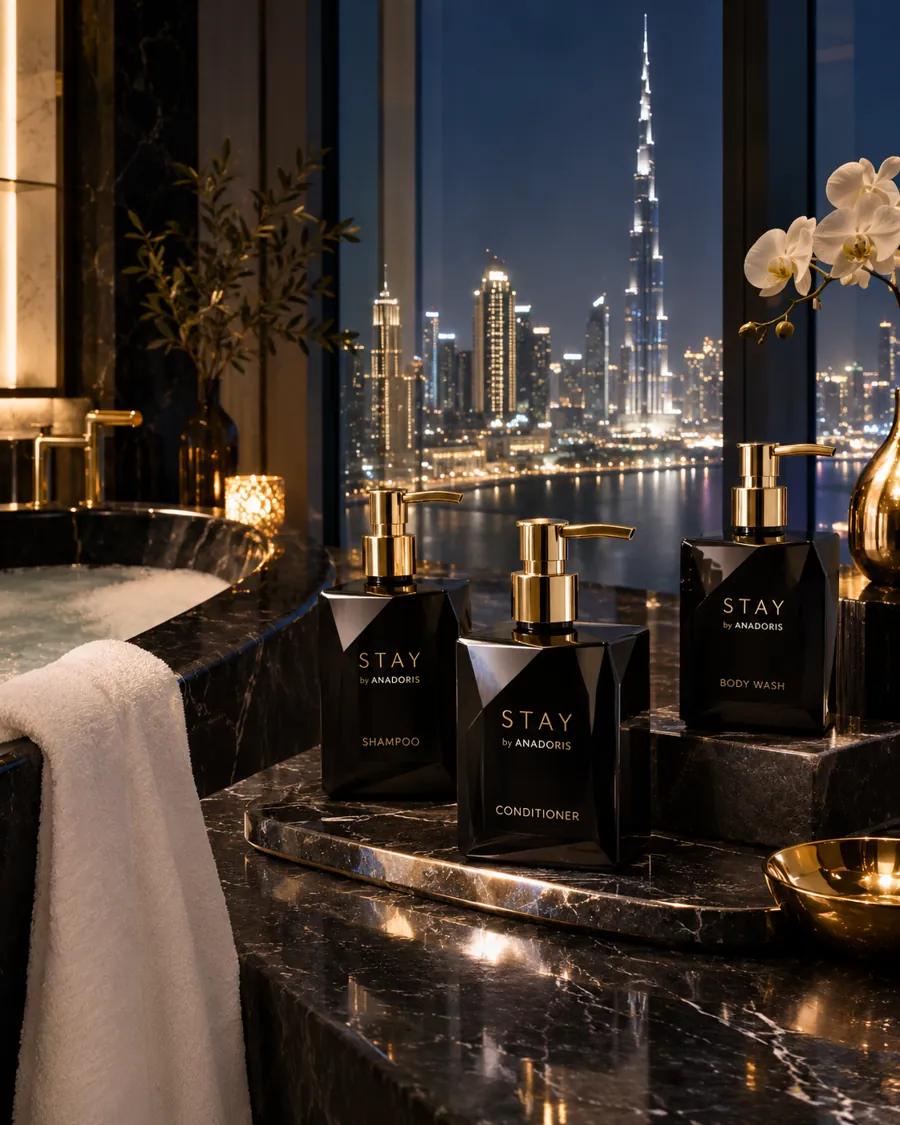
A replacement rule decides when an item is swapped. If attendants replace every bottle at every service, partly used bottles leave the room long before they are empty. A rule such as "replace when below a marked level" or "replace when opened, on checkout only" can lower usage noticeably. Write the rule into the standard operating procedure and train it, because habits drift. See restocking policies for the options.
Check the rule against your brand standard and guest expectations. In luxury rooms, a fresh bottle may be part of the promise.
How packaging and variants hide cost
Each fragrance, size and label variant needs its own minimum, its own stock and its own space in stores. Cutting the number of variants concentrates volume, which can move you to a better price tier, and reduces the risk of slow lines expiring. Packaging decisions work the same way: an individual carton for every miniature adds material and labour that guests may never notice. Ask your supplier which packaging lines weigh most in your unit price; the method is set out in our guide on what drives the unit cost of a bottle.
Ordering and stock measures
- Order to a forecast based on room nights, not to a habit.
- Agree an annual quantity with scheduled deliveries to reach better tiers without holding all the stock.
- Hold less safety stock once deliveries are reliable.
- Store amenities in suitable conditions so fewer units are damaged.
- Count stock regularly so shrinkage is noticed early.
What not to cut
- The formula on products guests use every stay, such as shampoo and body wash.
- Items named in your brand standard or listing.
- Accessibility items in accessible rooms.
- Hygiene items that guests request when missing.
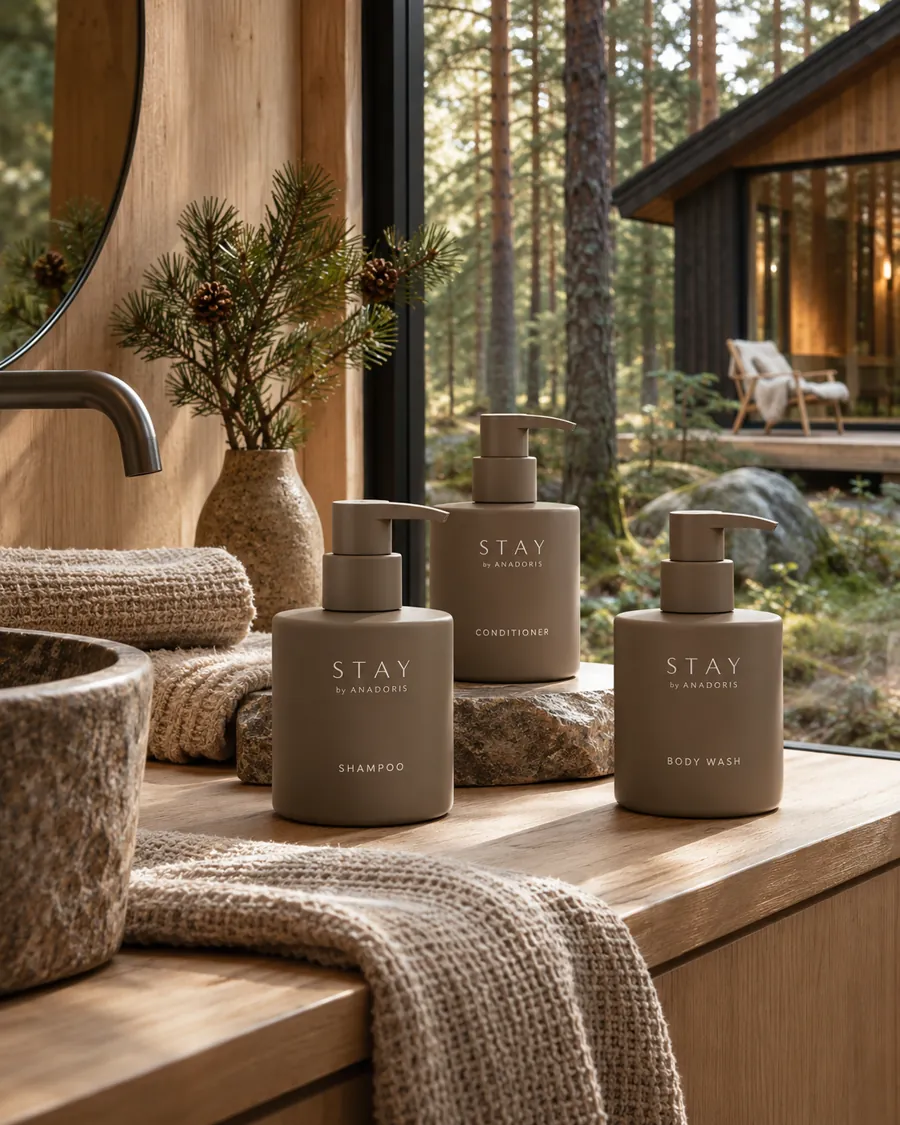
Guests notice a thinner shampoo before they notice a simpler carton. If you want to test a change, place it in a sample of rooms and watch requests and reviews before rolling it out. STAY can quote alternatives side by side, such as a stock bottle against a custom one; ask through the quote page.
Questions on this topic
What is the quickest saving?
Usually the replacement rule, because it reduces units used without changing supply. Train it and check it in a few rooms.
Will guests notice simpler packaging?
Many will not notice a change in secondary packing. Changes to the bottle or closure are more visible.
Is switching to dispensers always cheaper?
Not always. Compare on total cost of ownership, including equipment and labour, for your property.
Keep reading
- How to build an annual hotel amenity budget
- Setting an amenity cost target and tracking variance
- What drives the unit cost of an amenity bottle?
- Total cost of ownership for amenities: a working method
- How to stock an Airbnb bathroom
- Hospital and clinic bathroom amenities: what to consider
- Gym locker room amenities: a practical checklist
Looking for supply? See Hotels & resorts, browse the product range or request samples.