

Guide
How to cost a private-label launch for a small brand
Costing a private-label launch means adding the one-off cost of creating the range to the unit cost of each product, then checking that the selling price leaves a margin after every channel cost. Small brands most often go wrong by costing the unit and forgetting the launch.
By Hemang Jain, Founder, Anadoris
Who this method is for
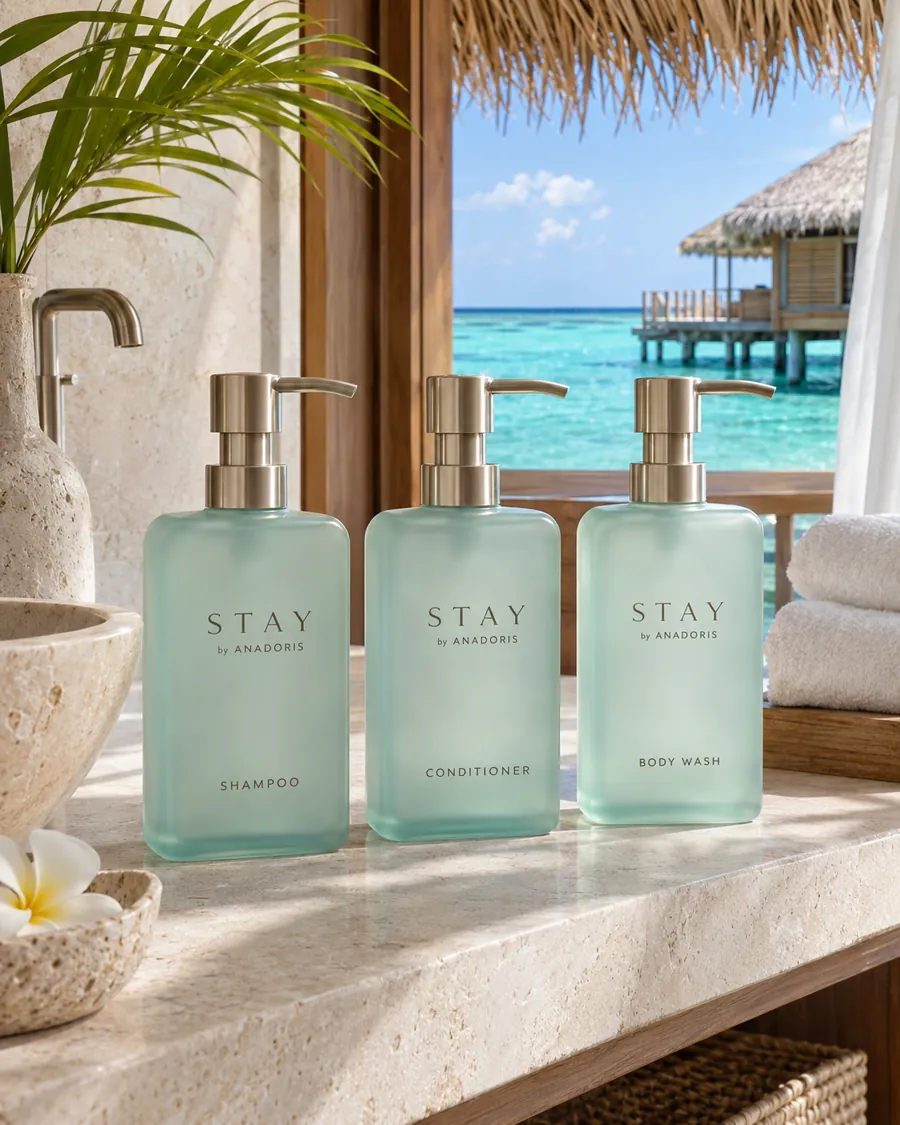
This guide is for small personal care, wellness and lifestyle brands, including direct-to-consumer brands, spas and boutique hotels selling under their own name, that want a manufacturer to produce a range for them. The same logic applies whether the range is two products or ten. It also applies to hotels and spas creating a retail range for their own boutique, where the selling price is set by the property rather than a marketplace. For how private label works more generally, see private label.
Two kinds of cost: launch and unit
A private-label launch carries costs that happen once and costs that repeat with every unit sold.
| Launch costs (once) | Unit costs (every unit) |
|---|---|
| Formula development or adaptation | Formula and fragrance |
| Fragrance selection or development | Bottle, closure and decoration |
| Packaging design and artwork | Label and carton |
| Plates, screens or moulds | Filling and packing |
| Samples and stability or compatibility checks where required | Freight to your warehouse |
| Regulatory and labelling review | Duty and taxes where relevant |
| Photography and listing content | Channel fees, fulfilment and returns |
Spreading launch costs over the first run
To see what a launch really costs per unit, divide total launch cost L by the units you expect to sell from the first production run, N:
Launch cost per unit = L ÷ N
Add this to the unit cost for the first run only. If N is small, the launch share can outweigh the product cost itself, which is why a small, focused first range is usually wiser than a wide one. A brand launching a few products, each at the minimum, carries far less launch cost per unit than one launching many products in several sizes, because design, plates and approvals multiply with every variant. Minimums for branded ranges start from around 5,000 units per product at our plant, confirmed with the quotation, so N is at least the minimum for each product you launch.
Building the full unit cost
- Unit price from the manufacturer's quotation.
- Plus freight, insurance and handling to your warehouse, divided by units.
- Plus duty and non-recoverable taxes if importing.
- Plus launch cost per unit for the first run.
- Plus fulfilment, payment and channel fees per unit sold.
- Plus an allowance for returns, damage and samples given away.
The total is your real cost per unit sold. Compare it with your intended selling price after any taxes included in that price.
Checking the margin
Gross margin per unit is the selling price, net of taxes, minus the full unit cost. Express it as a share of the net price and compare it with what your business needs to cover marketing, salaries and overheads. If the margin is thin, look first at the range size, the packaging and the channel mix rather than the formula. A simpler pack or fewer products in the first run usually helps more than a cheaper base.
Run the calculation twice: once for the first run, including launch costs, and once for repeat runs without them. The repeat-run margin shows whether the range is sustainable once launch costs are behind you.
How to keep the launch affordable
- Launch with fewer products and add more once sales prove demand.
- Use one fragrance across the range.
- Choose stock bottles and closures to avoid mould costs.
- Use one carton size and vary only the print.
- Plan the second run before the first sells out, so you are not forced into a rushed reorder.
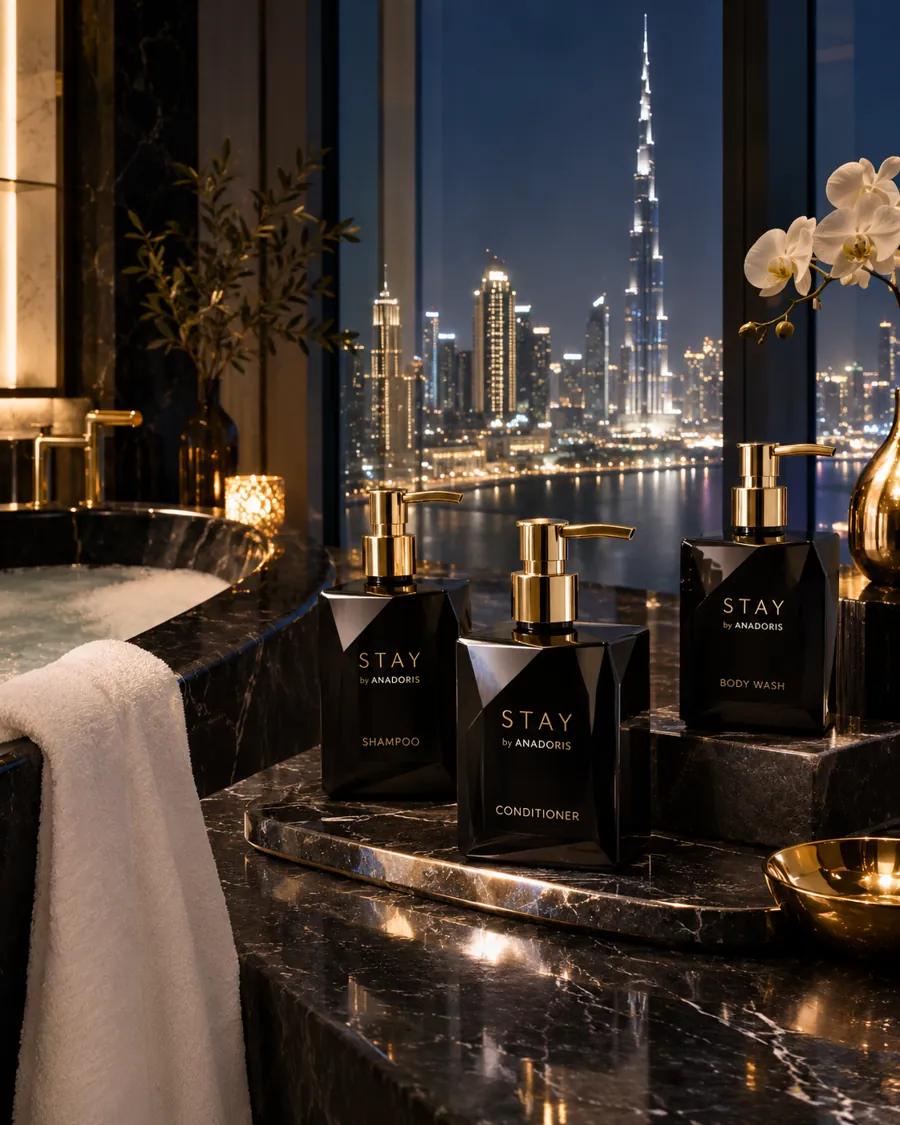
STAY can cost a first run and a repeat run separately for a small brand; start with samples or a quotation.
Questions on this topic
What is the biggest hidden cost in a launch?
Often design, plates and samples, which happen once but can outweigh product cost on a small first run.
How many products should a first range have?
As few as you can launch credibly. Each extra product adds its own minimum and launch costs.
Should I include samples I give away?
Yes. Samples for influencers, retailers and testers are part of the launch cost and should be spread over the first run.
Do I own the formula?
Usually not unless agreed in writing. Clarify ownership of formula, artwork and tooling before you sign.
Keep reading
- How to build an annual hotel amenity budget
- Setting an amenity cost target and tracking variance
- What drives the unit cost of an amenity bottle?
- Total cost of ownership for amenities: a working method
- How to stock an Airbnb bathroom
- Hospital and clinic bathroom amenities: what to consider
- Gym locker room amenities: a practical checklist
Looking for supply? See Hotels & resorts, browse the product range or request samples.